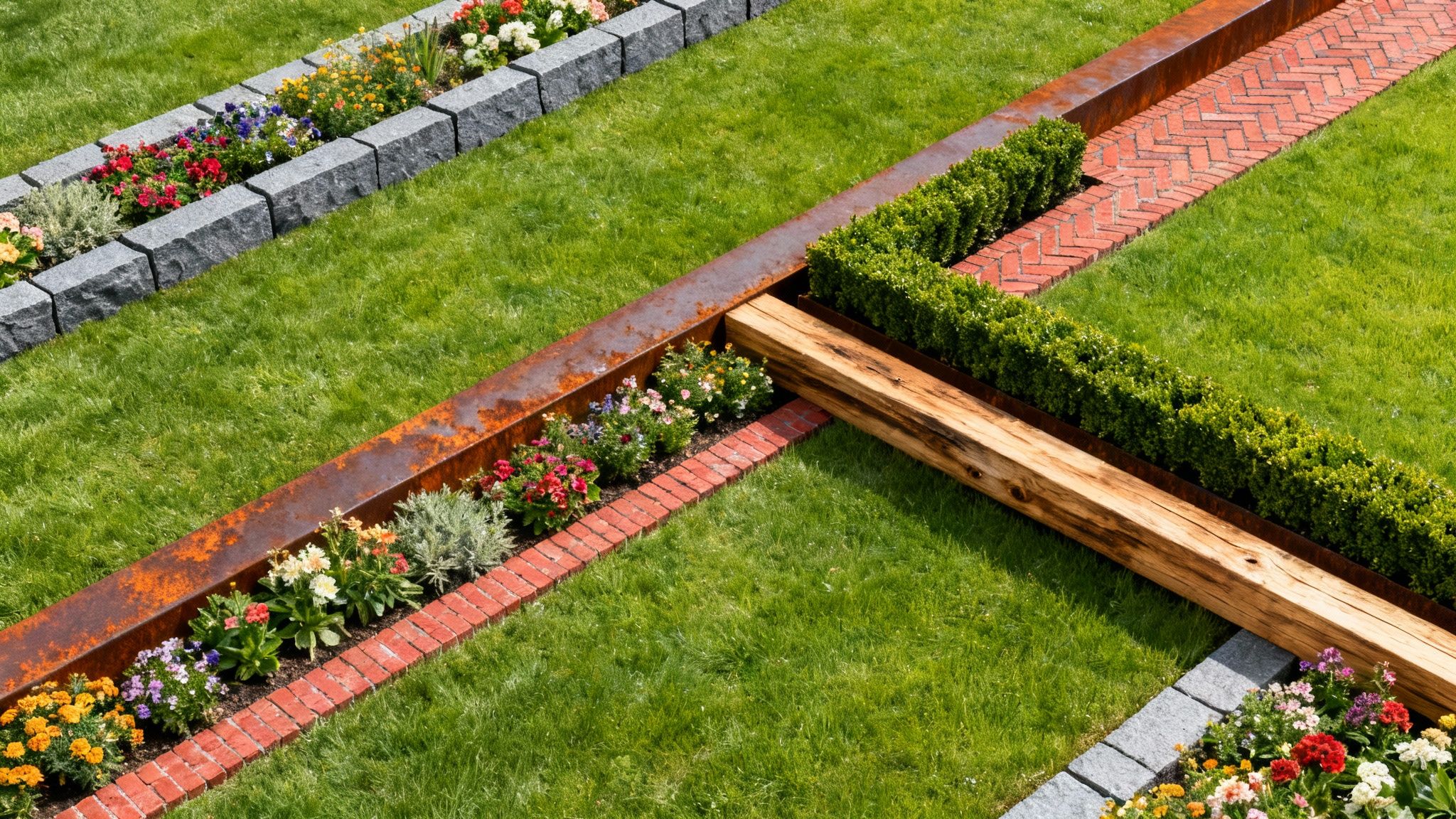
A well-defined edge is often the unsung hero of a garden, transforming a simple lawn into a polished, professional-looking landscape. It acts as the frame for your horticultural masterpiece, creating a crisp, visual separation that makes colours pop and textures stand out. More than just an aesthetic choice, the right lawn edging is a practical workhorse, preventing grass from encroaching on flowerbeds and keeping mulch, soil, and gravel neatly contained.
However, navigating the world of lawn edging ideas can be surprisingly complex. The sheer variety of materials, from the sleek lines of Corten steel to the rustic charm of reclaimed timber or the timeless appeal of natural stone, presents endless possibilities. Do you need a formal, structured border or a soft, natural transition? Should it be a subtle, almost invisible line or a bold, decorative feature in its own right? The choice you make will fundamentally shape your garden's character and influence your long-term maintenance routine.
This comprehensive guide is designed to demystify the process. We have curated a collection of versatile and inspiring lawn edging ideas to suit every style, budget, and skill level. We will explore the distinct advantages and potential drawbacks of each option, providing practical insights on installation, cost, and suitability. Whether you are undertaking a complete garden redesign or simply looking for a weekend project to elevate your outdoor space, you will find the actionable advice needed to select and implement the perfect edge, creating clean lines and a beautifully organised garden that looks sharp all year round.
1. Metal Edging (Steel or Aluminium)
For those seeking a crisp, modern, and nearly invisible border, metal edging is an exceptional choice. This popular lawn edging idea involves installing thin, durable strips of steel or aluminium vertically into the ground, creating a precise and enduring separation between your lawn and garden beds. Its sleek profile offers a subtle yet powerful definition that complements contemporary, minimalist, and formal garden designs without dominating the landscape.
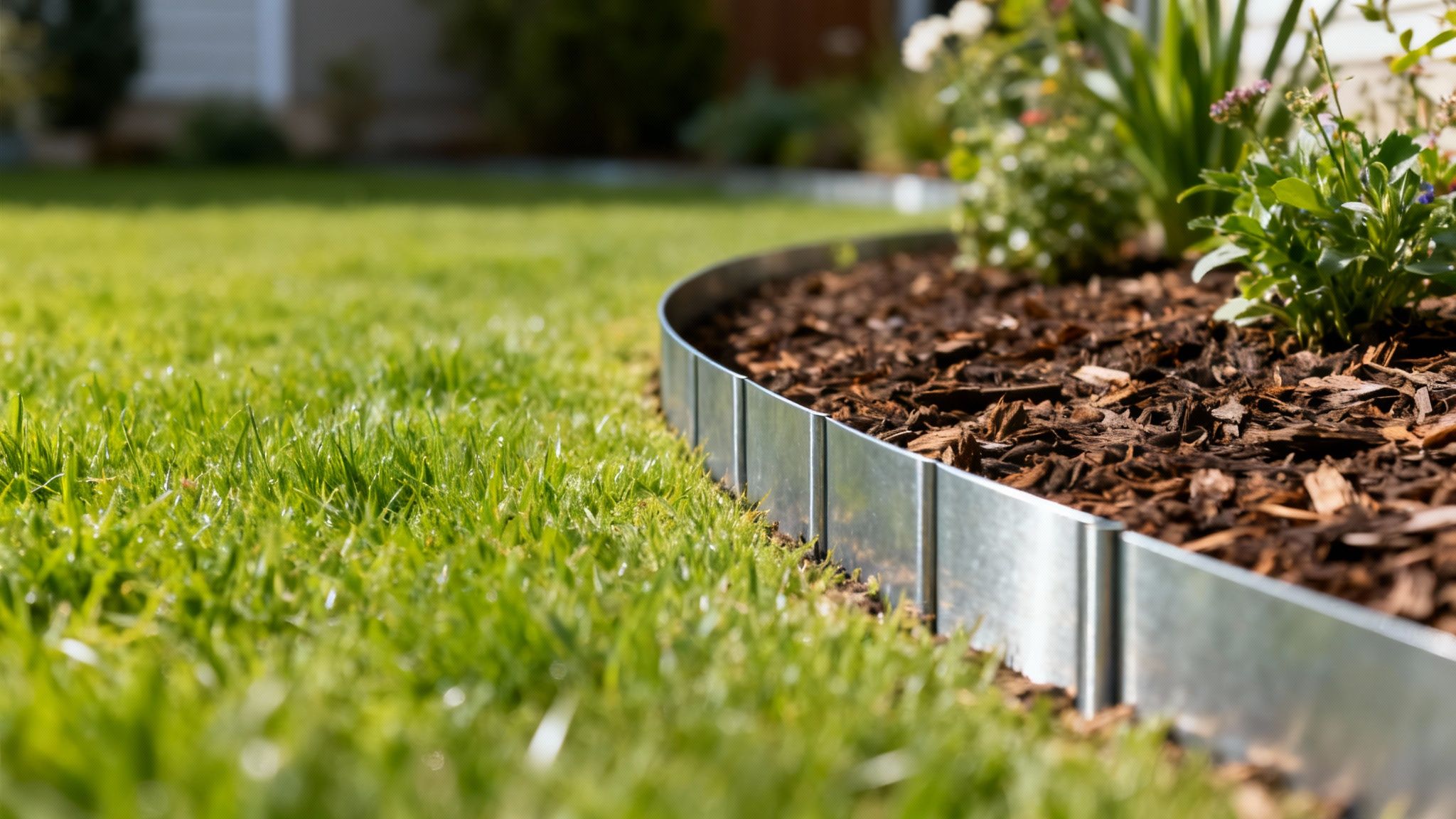
The primary benefit is its longevity and strength. Metal edging effectively contains mulch, soil, and gravel while preventing grass roots from creeping into flowerbeds. It is also flexible enough to form elegant curves, making it highly versatile for various garden layouts, from sharp geometric angles to gentle, flowing lines.
Key Considerations & Tips
When choosing metal, the main decision is between steel and aluminium. Standard steel will develop a rustic patina as it oxidises, a look favoured in certain garden styles. For a cleaner, long-lasting finish, opt for galvanised or powder-coated steel, which resists rust. Aluminium is naturally rust-proof and lighter, though it typically comes at a higher price point.
For a successful installation:
- Proper Depth: Bury at least half of the edging's height (e.g., 4 to 5 cm of an 8 cm strip) to ensure it remains stable and upright.
- Safe Installation: Use a rubber mallet and a block of wood to gently tap the edging into place. This prevents denting the metal or damaging its protective coating.
- Level Check: Frequently use a spirit level during installation. An uneven edge can trap water and look unprofessional.
- Joining Sections: Ensure sections are securely connected using the provided stakes or clips to maintain a seamless, continuous line.
Metal edging is one of the best lawn edging ideas for a low-maintenance, high-impact finish that will stand the test of time.
2. Plastic or Composite Edging
For a highly affordable, flexible, and beginner-friendly solution, plastic or composite edging is a go-to choice. This lawn edging idea utilises lightweight borders made from recycled plastic or composite materials, offering an accessible way to create definition between lawns, pathways, and garden beds. Its supreme flexibility makes it ideal for crafting intricate curves and circles that would be challenging with more rigid materials, lending itself well to informal and organic garden layouts.
The main appeal lies in its cost-effectiveness and ease of installation. Often sold in long rolls, it can be quickly set into a shallow trench and secured with stakes. While traditional plastic edging is known as a budget option, modern composite materials have significantly improved durability and appearance, offering wood-grain textures and a longer lifespan, making them a more permanent and aesthetically pleasing option.
Key Considerations & Tips
When selecting this type of edging, it's crucial to consider the material's quality. Basic plastic can become brittle and fade over time with sun exposure, whereas high-quality composites are designed to withstand the elements for much longer. Its light weight makes it perfect for temporary garden layouts or for use in rental properties where non-permanent solutions are preferred.
For a neat and lasting installation:
- UV Resistance: Choose products specifically labelled as UV-stabilised to prevent the material from cracking, warping, and losing its colour in the sun.
- Secure Staking: To prevent the edging from heaving up during freeze-thaw cycles, use the recommended plastic or metal stakes every 30-45 cm (12-18 inches), especially on curves.
- Weed Prevention: Lay down a strip of landscape fabric in the trench before installing the edging. This creates a highly effective barrier against weeds and grass roots.
- Create a Trench: For a professional finish, dig a narrow trench about 8-10 cm deep for the edging to sit in, rather than just hammering it into the ground. This keeps it straight and secure.
Plastic and composite options are among the most versatile lawn edging ideas for homeowners seeking a practical, low-cost border that can be installed in a single afternoon.
3. Stone and Brick Edging
For a classic, enduring border with a sense of permanence and tradition, stone and brick edging offers unparalleled character. This lawn edging idea involves setting natural stones, uniform bricks, or manufactured pavers into the ground to create a substantial and highly visible boundary. The result is an elegant, timeless aesthetic that integrates beautifully with paths, patios, and other hardscaping elements, making it a perfect fit for English country gardens, formal estates, and Mediterranean-inspired landscapes.
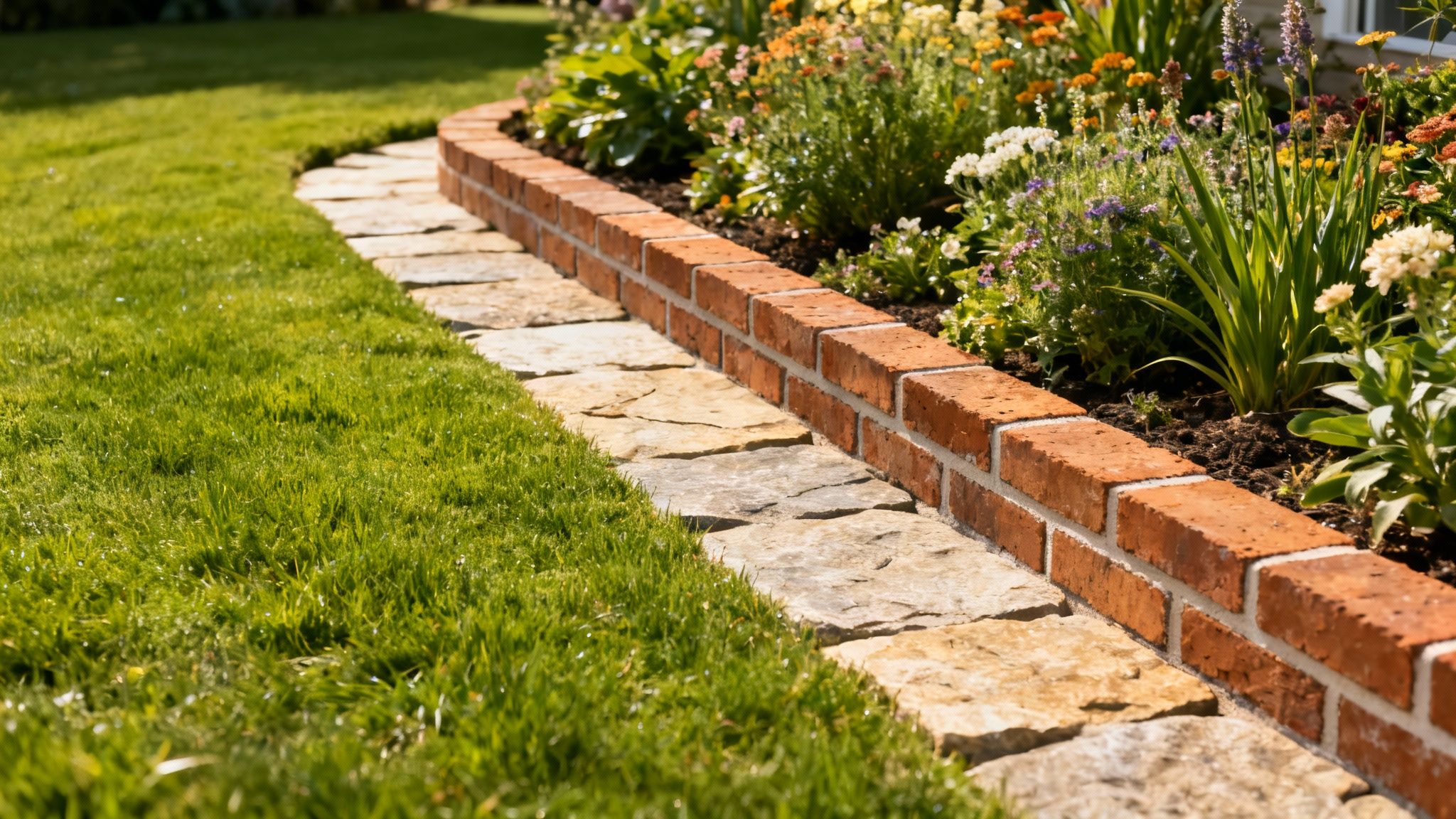
The main advantage of stone and brick is its durability and visual weight. This solid barrier is extremely effective at containing garden soil and preventing grass from encroaching, while also providing a stable mowing strip if installed flush with the lawn. Whether you choose the unique, organic shapes of natural stone or the consistent, clean lines of brick pavers, this method adds texture, colour, and a strong structural element to your garden design. For more in-depth guidance on this style, explore these flower bed edging ideas.
Key Considerations & Tips
The key to a long-lasting stone or brick edge lies in a stable foundation. Unlike simpler edging types, this method requires more groundwork to prevent shifting and sinking over time. Natural stone offers rustic charm but can be inconsistent in size, while manufactured pavers and bricks ensure a uniform, tidy appearance.
For a professional-looking installation:
- Create a Solid Base: Dig a shallow trench and fill it with a 5-7 cm layer of compacted gravel or sand. This provides a stable, level base that allows for drainage and prevents frost heave from displacing the stones.
- Prevent Weed Growth: Lay a strip of landscape fabric in the trench before adding the base material. This will significantly reduce weeds growing up between the joints.
- Ensure it is Level: Use a spirit level across the tops of the bricks or stones as you lay them. A level edge is crucial for a neat appearance and to prevent it from becoming a tripping hazard.
- Secure the Joints: Fill the gaps between the units with sand or a polymeric sand that hardens when wet. This locks the edging in place and further inhibits weed growth.
Stone and brick are some of the best lawn edging ideas for anyone looking to invest in a low-maintenance, high-impact border that will enhance their property for decades.
4. Wooden Edging
For a warm, natural, and rustic boundary, wooden edging is a classic and versatile choice. This traditional lawn edging idea uses materials like landscape timbers, cedar boards, or half-moon logs to create a defined yet soft border between lawns, paths, and garden beds. Its organic appearance integrates seamlessly into cottage, country, and informal garden designs, adding texture and a sense of handcrafted charm.
The primary appeal of wood is its aesthetic versatility and structural integrity. It is robust enough to contain soil in raised beds and prevent turf from encroaching into planted areas. Whether you opt for chunky railway sleepers for a bold statement or slender bender board for creating gentle curves, wood offers a wide range of styles to suit any rustic or naturalistic landscape.
Key Considerations & Tips
The most critical decision when choosing wooden edging is the type of timber. Pressure-treated pine is a cost-effective option designed to resist rot and insects, but it contains chemicals. For vegetable patches or organic gardens, naturally rot-resistant woods like cedar or redwood are a safer, albeit more expensive, alternative. Understanding the best wood for outdoor projects can significantly impact the longevity of your edging.
For a durable and attractive installation:
- Choose the Right Timber: Select woods known for their outdoor durability. Learn more about the best wood for outdoor furniture and structures to make an informed choice.
- Protect the Wood: Apply a quality wood stain or sealant annually to protect the timber from moisture and UV damage, preventing it from greying and deteriorating prematurely.
- Improve Drainage: Install a layer of gravel or landscape fabric beneath the wood to improve drainage and create a barrier against ground moisture, which helps to slow down rot.
- Ensure Stability: Bury at least one-third of the wood's height into the ground to keep it securely in place and prevent it from shifting over time. Use galvanised screws or nails for joining sections to avoid rust stains.
Wooden edging is one of the most aesthetically pleasing lawn edging ideas for those wanting to add a touch of natural warmth and structure to their garden design.
5. Steel Cable Edging
For a truly minimalist and architectural statement, tensioned steel cable edging offers a sophisticated, modern boundary. This high-end lawn edging idea involves stringing taut stainless steel cables horizontally between securely anchored posts, creating a "floating" line that defines spaces without obstructing views. It's a striking choice for contemporary gardens, architectural homes, and commercial landscapes where a clean, industrial aesthetic is desired.
The primary advantage of this method is its visual lightness. Unlike solid barriers, steel cables provide a clear demarcation while maintaining an open, airy feel. This makes it particularly effective for defining edges along slopes, patios, or water features, where it acts as a subtle guide rather than a physical barricade. While it won't contain loose materials like mulch, it excels at delineating zones with unparalleled elegance.
Key Considerations & Tips
Due to the precision and safety requirements of tensioning cables, this is a job best left to professional installers with experience in balustrading or cable systems. The posts must be deeply and securely anchored in concrete footings to withstand the significant tension required to keep the cables taut and safe.
For a successful installation and lasting impact:
- Material Choice: Opt for marine-grade stainless steel cables and fittings. This material resists rust and corrosion, ensuring a pristine look for years with minimal maintenance.
- Post Integration: Choose post materials and colours that complement your landscape design. Powder-coated steel or aluminium posts in black, charcoal, or silver are popular choices that enhance the modern look.
- Proper Tensioning: The cables must be correctly tensioned to be effective and safe. A loose cable is a trip hazard and negates the crisp aesthetic.
- Annual Checks: Plan for an annual inspection to check and adjust the cable tension, as it can slightly loosen over time due to temperature changes.
Steel cable is one of the most distinctive lawn edging ideas for creating a high-impact, design-led border in a modern setting.
6. Sunken Edging (Mowing Strip)
For a highly practical and subtle border that dramatically simplifies lawn maintenance, a sunken edge, often called a mowing strip, is a superb solution. This lawn edging idea involves creating a shallow trench or lowering the garden bed by 5-10 cm (2-4 inches) below the level of the turf. The resulting depression acts as a natural barrier that stops grass from creeping into beds and provides a clear path for lawnmower wheels, allowing you to cut right to the edge without needing a separate strimmer.
The primary advantage of this method is its functionality and low visual impact. It creates a crisp, clean line that integrates seamlessly into the landscape, making it ideal for traditional English gardens, country estates, and low-maintenance residential gardens. While the edge can be left as a simple soil trench, it is often lined with a single course of bricks or pavers laid flat to create a solid, stable surface for the mower.
Key Considerations & Tips
A sunken edge is one of the most cost-effective lawn edging ideas, often requiring little more than labour. However, careful planning is crucial for it to function correctly and look its best, as it is a fundamental part of a good garden layout. For guidance on integrating features like this, you can learn more about how to plan a garden layout.
For a successful installation:
- Maintain Depth: A consistent depth of around 5-8 cm (2-3 inches) is ideal. Too shallow, and grass will easily cross over; too deep, and it can become a trip hazard.
- Ensure Drainage: If your garden has heavy clay soil or poor drainage, the trench can collect water. Consider adding a layer of gravel at the base before adding topsoil or pavers.
- Prevent Weeds: Line the bottom of the trench with a high-quality landscape fabric before backfilling or laying pavers. This will significantly reduce weed growth from below.
- Create a Gradual Slope: Taper the soil on the garden bed side of the trench to create a gentle slope rather than a sheer drop. This looks more natural and reduces the risk of trips.
This functional approach provides a beautifully defined yet understated edge that makes garden upkeep significantly easier.
7. Corten Steel Edging
For a sophisticated, architectural finish that blends rustic charm with modern design, Corten steel is a premium choice. This unique weathering steel is engineered to develop a stable, rust-like patina over time when exposed to the elements. This protective layer not only creates a stunning, deep reddish-brown colour but also eliminates the need for painting or other protective coatings, making it an incredibly durable and characterful lawn edging idea.
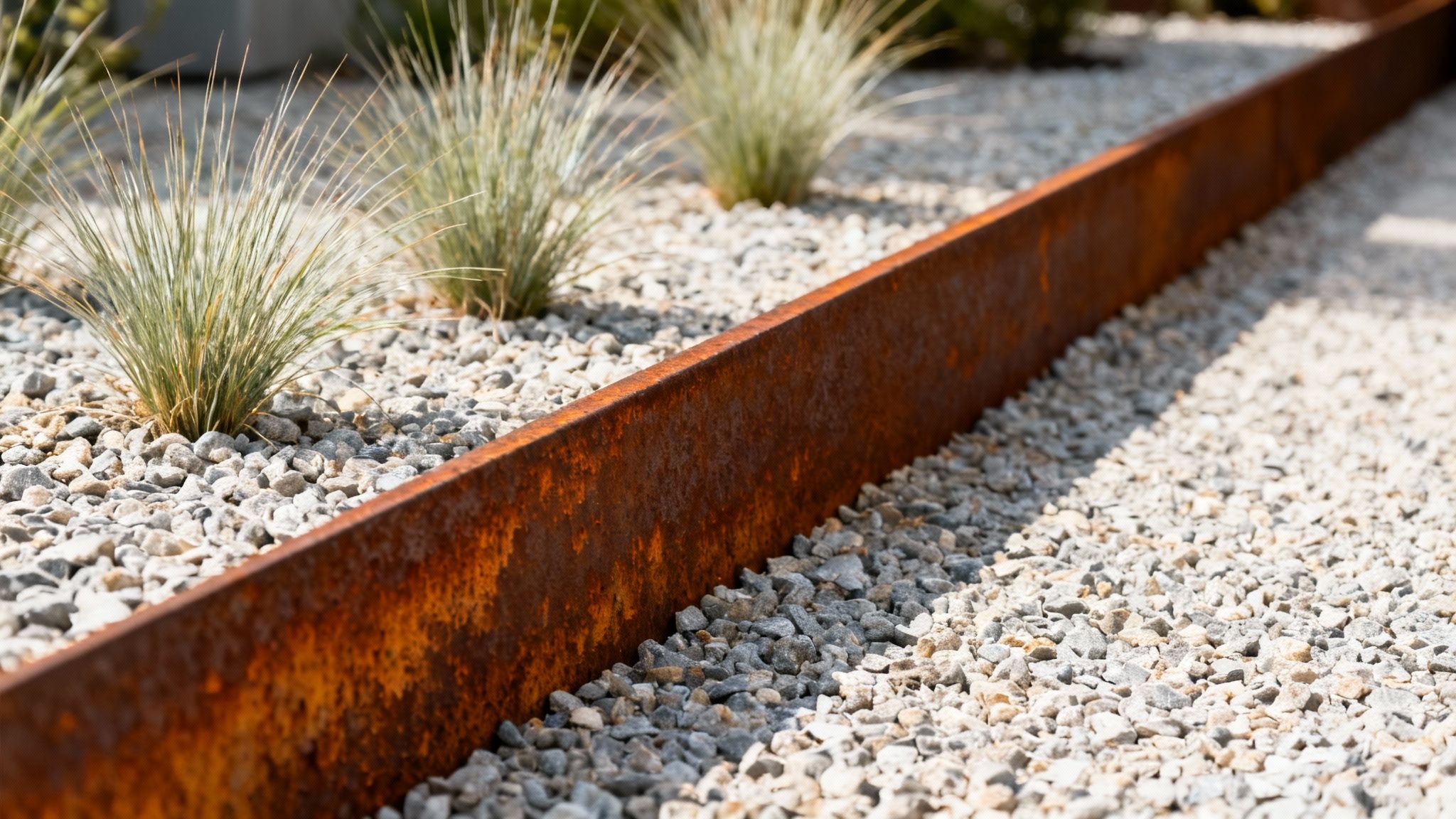
Popularised by landscape architects for its strength and distinctive aesthetic, Corten steel edging introduces a powerful visual element to the garden. It works exceptionally well in contemporary, industrial, and architectural landscapes, where its warm tones create a beautiful contrast against lush green lawns, minimalist gravel paths, or vibrant planting schemes. The material is strong enough to hold back soil and aggregates while being flexible enough to be shaped into striking curves or precise geometric forms.
Key Considerations & Tips
The primary characteristic of Corten steel is its weathering process. Initially, it will appear as standard steel, developing its signature patina over several months of exposure to rain and humidity. This natural evolution is part of its appeal, but it requires careful planning.
For a successful and beautiful installation:
- Manage Rust Run-off: During the initial weathering phase, rust-coloured water can run off and stain adjacent surfaces like light-coloured paving stones or concrete. Position the edging upslope from porous materials or protect them until the patina has stabilised.
- Allow Weathering Time: Be patient. The final rich colour and texture can take six months to a year to fully develop, depending on the climate.
- Choose Quality Material: Ensure you are purchasing genuine Corten steel with the correct alloy composition to guarantee it forms a protective, non-corrosive layer rather than simply rusting away.
- Professional Help: Due to its weight and the need for precision, professional installation is often recommended, especially for complex designs or long runs.
- Aesthetic Pairing: Corten looks fantastic when paired with minimalist materials like decorative gravel, dark mulch, or ornamental grasses, which allow its unique colour and texture to stand out.
8. Concrete Poured Edge
For the ultimate in permanence and customisation, a poured concrete edge offers a seamless, durable, and highly integrated solution. This lawn edging idea involves creating a continuous concrete border that is poured on-site, allowing it to be shaped, coloured, and textured to perfectly match your landscape's aesthetic. Its solid, substantial presence provides an unmatched barrier against grass encroachment and is ideal for creating clean, professional lines in modern, commercial, or high-traffic settings.
The key benefit of a poured concrete edge is its design flexibility. Unlike pre-cast blocks, poured concrete can follow any curve or angle you desire, flowing smoothly alongside driveways, patios, and winding garden beds. This method effectively contains soil, mulch, and aggregates while providing a stable surface for mower wheels, which simplifies lawn maintenance and creates an exceptionally tidy finish.
Key Considerations & Tips
While highly effective, poured concrete is a labour-intensive option that requires precision. For a professional-looking and long-lasting installation, proper preparation is crucial. You can choose a standard grey finish or enhance the concrete with colours, stamps, or exposed aggregate for added visual appeal.
For a successful installation:
- Plan for Drainage: Ensure the ground is properly prepared and graded away from the edging to prevent water from pooling against the concrete, which can damage turf and plants.
- Reinforce for Strength: For wider or heavy-duty borders, embedding rebar or wire mesh within the concrete will significantly improve its tensile strength and prevent cracking over time.
- Add Control Joints: Cut shallow grooves (control joints) into the concrete every 1.5-2 metres. These planned weak points encourage any potential cracking to occur in a neat, straight line.
- Apply a Sealant: Once cured, applying a quality concrete sealant will protect the edge from water damage, stains, and fading, preserving its appearance for years.
A concrete poured edge is one of the most robust lawn edging ideas, delivering a permanent, high-end look that seamlessly integrates with your property’s hardscaping.
9. Living Hedges and Planted Borders
For a truly integrated and organic boundary, a living edge of low hedges or densely planted borders is an elegant solution. This classic lawn edging idea uses plants themselves to create a natural, soft, yet clear division between the lawn and garden beds. Species like boxwood, lavender, or ornamental grasses are grown closely together to form a living barrier that adds texture, colour, and seasonal interest, seamlessly blending hardscape and horticulture.
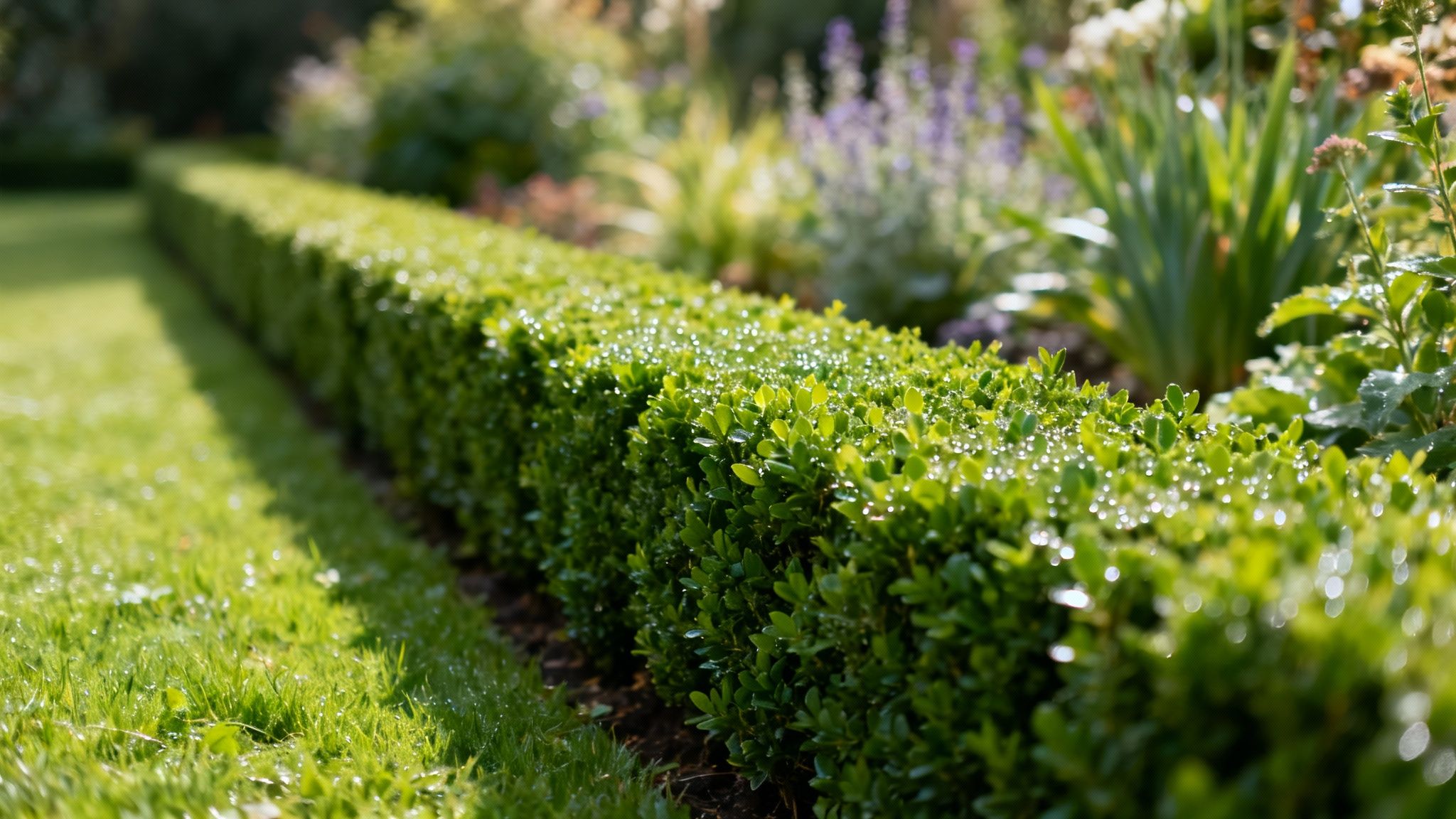
The primary appeal of a living edge is its unparalleled beauty and ecological value. It provides habitat for pollinators, softens the hard lines of a landscape, and evolves throughout the year. This approach is perfect for cottage, formal, and naturalistic garden designs, offering a dynamic border that is both functional and aesthetically pleasing. While it requires more maintenance than inanimate materials, the reward is a lush, vibrant garden frame.
Key Considerations & Tips
Choosing the right plants is crucial for a successful living border. Consider your climate, soil type, and the amount of sunlight the area receives. Low-growing, dense-forming plants are ideal. Boxwood (Buxus sempervirens) is a traditional choice for formal, clipped hedges, while ornamental grasses like Hakonoechloa macra provide a more relaxed, modern feel. For more inspiration, explore these garden border plant ideas on sprucecollective.co.uk.
For a thriving living edge:
- Proper Spacing: Plant specimens closer together than you normally would to encourage them to merge into a continuous, dense line.
- Establishment Care: Water regularly during the first year to help the plants establish a strong root system. Planting in spring or autumn is often best.
- Encourage Bushiness: Prune young plants lightly after their first growing season to promote dense, bushy growth from the base.
- Keep it Tidy: Regular trimming will be necessary to maintain the desired shape and height and to prevent the plants from encroaching onto the lawn.
A living hedge is one of the most rewarding lawn edging ideas, turning a simple boundary into a beautiful and vital garden feature.
10. Reclaimed and Recycled Material Edging
For the eco-conscious gardener looking to add a layer of unique character to their landscape, reclaimed and recycled material edging is a standout choice. This sustainable lawn edging idea involves repurposing items like salvaged bricks, old roof tiles, recycled plastic lumber, or even glass bottles to create a truly one-of-a-kind border. It’s an approach that champions creativity and environmental responsibility, turning potential waste into a charming and functional garden feature.
The primary benefit of this method is its distinctive aesthetic and eco-friendly credentials. Each piece tells a story, adding a sense of history and personality that new materials simply cannot replicate. It’s a perfect fit for cottage, rustic, and eclectic garden designs, offering endless possibilities for customisation while reducing landfill waste.
Key Considerations & Tips
Sourcing and preparing your materials are the most critical steps for this type of project. The beauty is in the imperfections, but safety and longevity should not be overlooked. While you can find inspiration in almost anything, from old plates to broken paving slabs, ensure the items are suitable for outdoor use.
For a successful and safe installation:
- Source Safely: Check local salvage yards, deconstruction companies, and online marketplaces. When using old timber like railway sleepers, avoid those treated with creosote, especially near vegetable patches, as the chemical can leach into the soil.
- Thorough Cleaning: Before installation, clean all materials thoroughly to remove dirt, debris, and any potentially harmful residues. A stiff brush and a pressure washer can be effective.
- Stable Foundation: For heavier items like salvaged bricks or stone, dig a shallow trench and lay a base of sand or gravel. This helps with levelling and prevents the edging from shifting over time.
- Creative Combinations: Don’t be afraid to mix and match materials. A combination of reclaimed brick and colourful glass bottles, for instance, can create a vibrant mosaic-like border. For further inspiration on using reclaimed wood, you can explore various pallet wood projects.
Using reclaimed items is one of the most imaginative lawn edging ideas, allowing you to build a border that is not only functional but also a true reflection of your personal style and commitment to sustainability.
Lawn Edging: Quick 10-Option Comparison
Choosing Your Edge: The Final Touches for a Flawless Garden
You’ve explored the clean lines of steel, the rustic charm of timber, and the classic appeal of brick. We've journeyed through a landscape of diverse and creative lawn edging ideas, each offering a unique way to define and elevate your garden's aesthetic. The right edge is more than a simple barrier; it’s the frame that brings the picture of your garden into sharp, beautiful focus. It's the finishing touch that transforms a pleasant space into a polished, professional-looking landscape.
Choosing the perfect border is a balancing act, a synthesis of personal style, practical needs, and your garden's unique character. By now, you understand that the decision rests on three core pillars: aesthetics, function, and maintenance. The sleek, almost invisible line of black aluminium edging might be perfect for a contemporary garden, while the timeless appeal of a stone sett border could be the ideal complement to a traditional cottage garden. Reflect on the materials that speak to you and harmonise with your home's architecture.
From Inspiration to Implementation: Your Next Steps
The journey from a list of ideas to a finished garden edge requires a clear plan. Don't let the variety of options lead to indecision. Instead, use it as a catalyst for action. Here’s a simple framework to guide you forward:
Revisit Your Goals: What is the primary purpose of your edging? Is it to create a crisp mowing strip, to contain aggressive plants like mint, to prevent lawn creep into your flowerbeds, or purely for decorative effect? Your answer will immediately narrow down your choices. A sunken brick path serves a different function than a decorative low-growing hedge, for instance.
Conduct a Site Audit: Walk your garden with a critical eye. Consider the curves, straight lines, and slopes. A flexible material like composite edging or Corten steel is far better suited to a winding path than rigid wooden sleepers. Assess the soil type and drainage, as this can influence the stability and longevity of certain materials like untreated wood.
Finalise Your Budget and Timeline: Be realistic about costs, factoring in not just the materials but also any necessary tools, aggregates like sand or gravel, and potential labour if you're not planning a DIY project. Some lawn edging ideas, like poured concrete, represent a significant upfront investment but offer decades of low-maintenance durability. Others, like using reclaimed materials, might be budget-friendly but require more time and effort to source and install.
The Long-Term Vision: A Garden That Works for You
Ultimately, the best lawn edging ideas are those that simplify your life and amplify your enjoyment of your outdoor space. A well-installed border reduces weeding, makes mowing significantly easier, and provides the clear definition that helps a garden look tidy and intentional, even when it’s at its most wild and abundant. It's an investment in your property's kerb appeal and, more importantly, in your own time and peace of mind.
You now have the knowledge and inspiration to select an edge that is not just a line in the ground, but a statement of your personal style and a testament to a well-loved garden. So, take these concepts, measure your space, and begin the satisfying process of creating those perfect, crisp lines. Your flawless garden is waiting.