
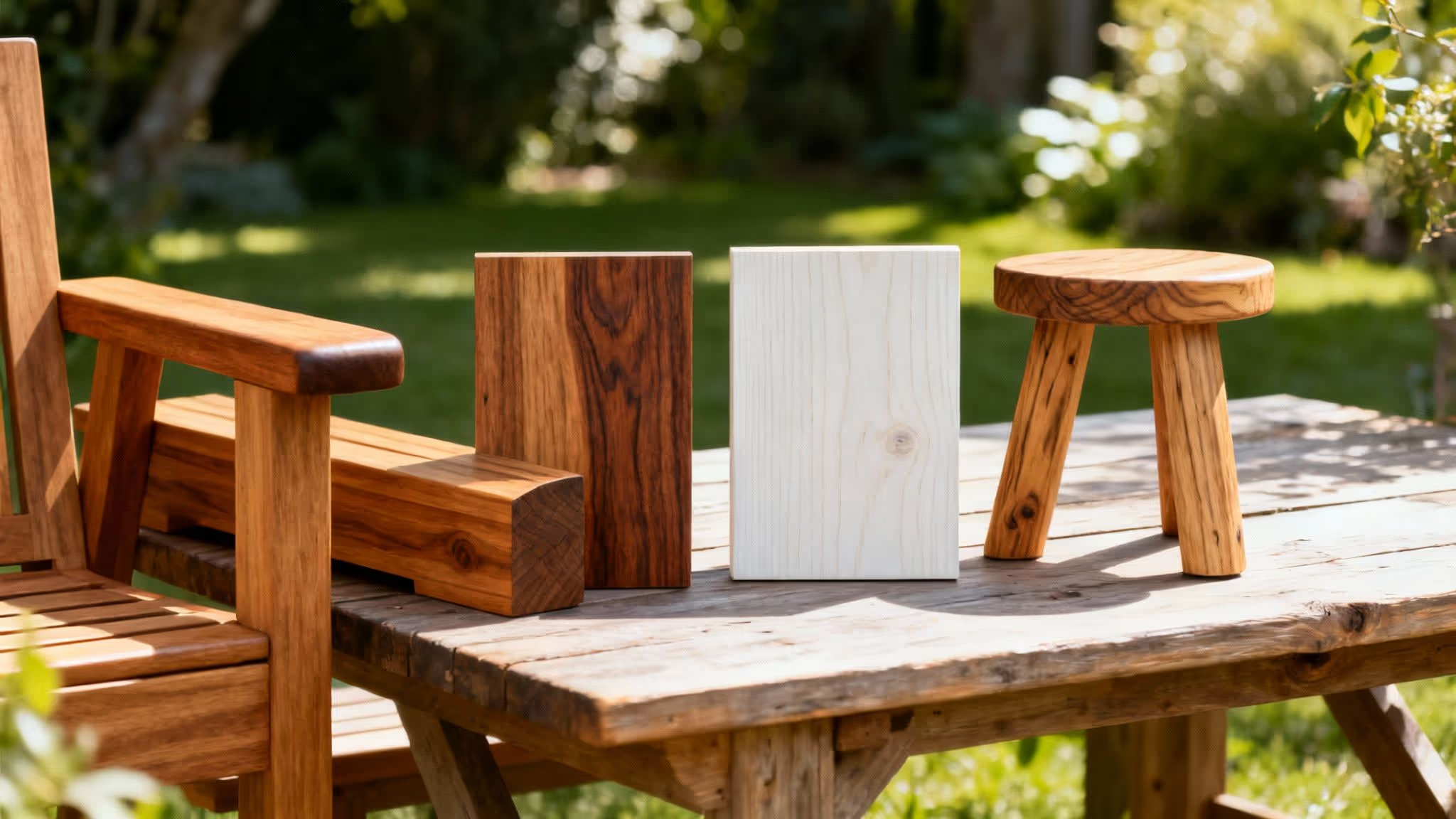
When it comes to picking the best wood for outdoor furniture, you really can't go wrong with timeless hardwoods like Teak and White Oak. They're top-tier choices for a reason, especially given their natural knack for handling the UK's notoriously damp climate. Honestly, getting the material right is the single most important decision you'll make for creating garden furniture that looks fantastic and lasts for years.
Why Your Choice of Wood for Garden Furniture Matters
Picture your ideal garden escape—that perfect spot for a lazy sunny afternoon or a long, relaxed summer evening. The right furniture is at the heart of that picture, but with the UK's famously unpredictable weather, the type of wood you choose is everything. It’s what separates a beautiful, lasting investment from a set that starts to warp, rot, or splinter after just one season.
Making a smart choice from the outset means your furniture will be able to shrug off the rain, fend off insects, and stand up to the summer sun without falling apart. This decision doesn't just affect how long your furniture lasts; it also dictates how much time you'll spend maintaining it year after year.

Balancing Aesthetics and Practicality
The perfect wood for outdoor furniture has to walk a fine line between looking good and being tough enough for the job. Of course, you want something that complements your garden's style, but durability is simply non-negotiable when it's going to live outside. It's a bit like buying a winter coat; a fashionable but flimsy jacket is no good when you're caught in a proper British downpour.
A few key factors should always be on your mind:
- Weather Resistance: Does the wood naturally repel water and resist rot?
- Durability: Is it a dense hardwood that can take a few knocks without denting or scratching easily?
- Maintenance Needs: How much work are you prepared to put in to keep it looking its best?
- Cost vs Lifespan: Is the initial price a fair reflection of a long-term investment?
The Enduring Popularity of Wood
Even with all the modern metal and synthetic options available, wood remains a firm favourite for garden furniture here in the UK. In fact, it's so popular that wood accounted for a massive 62.31% of the market's revenue, which shows just how much we value its natural charm and strength. As tastes have evolved, we've also seen a growing demand for timbers that are naturally weather-resistant—a very sensible trend, considering our climate.
At the end of the day, finding the 'best' wood is all about finding the right fit for your style, your budget, and how much upkeep you're willing to do. Taking the time to make an informed choice now, armed with an understanding of these key factors, is the surest way to protect your investment. It guarantees you'll be enjoying your garden furniture for many seasons to come. For a bit more inspiration, why not take a look at our guide on the top garden trends for 2025?
What Makes a Wood Truly Great for the Outdoors?
Before we get into specific types of timber, let's talk about what actually makes a piece of wood fit for life outside. It’s not as simple as just picking any old plank. Not all woods are created equal, especially when they’re up against the UK’s famously damp air and unpredictable seasons. The best choices have their own natural defences, allowing them to thrive, not just survive.
Think of the natural oils in premium woods like Teak as a built-in, invisible raincoat. These oils permeate the wood fibres, actively pushing away moisture that would otherwise soak in and cause rot. This same quality also makes the wood a less tempting meal for insects and fungi, acting as a natural pest deterrent without any nasty chemicals.
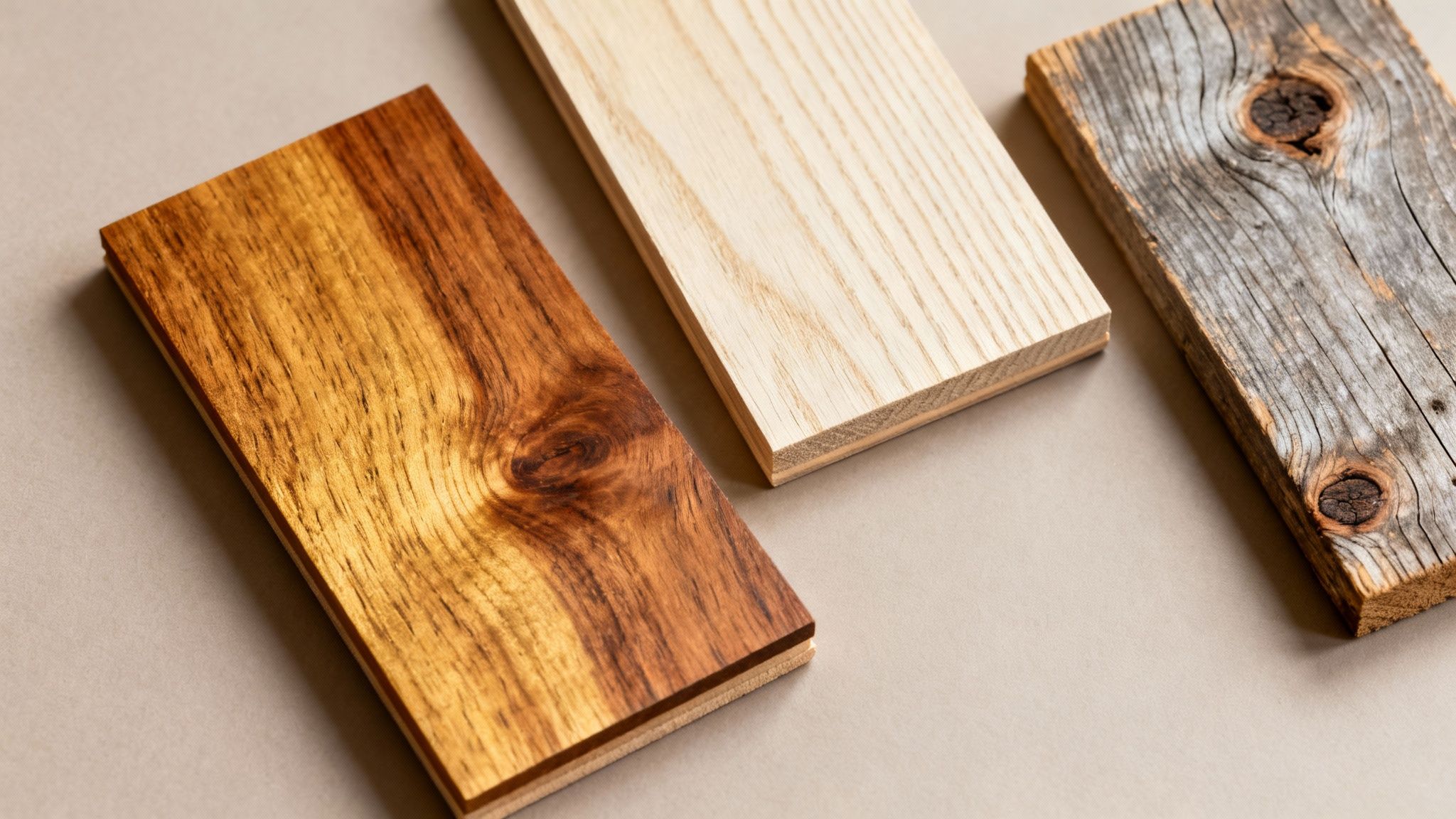
It's this internal shield that allows certain garden furniture to last for decades. Instead of decaying into a splintered mess, it develops that beautiful, silvery patina so many people love. This is the single biggest factor separating the best wood for outdoor furniture from the stuff that will let you down after just one wet winter.
Density and Grain Structure
Another piece of the puzzle is the wood's physical makeup – its density and grain. A dense wood with a tight, straight grain pattern is a bit like a well-built stone wall; it’s just inherently stronger and harder to breach. This tightness stops water from worming its way deep into the core, which is what causes that dreaded swelling, splitting, and warping.
On the other hand, woods with a loose, open grain are far more porous. They act more like a sponge, soaking up moisture from the air, which makes them unstable and gives them a much shorter lifespan. When you run your hand over a top-quality piece of outdoor furniture, you should feel a solid, smooth surface that tells you it’s built to last.
The real-world difference between hardwoods and softwoods often comes down to this density. While the botanical classification is about the tree's seeds, for our purposes, hardwoods like Oak are far denser and more durable than softwoods like Pine. That makes them a much better long-term investment for your garden.
Understanding Weathering and Resistance
To really get it right, you need to understand two key types of resistance that dictate how your furniture will age:
- Rot Resistance: This is all about the wood's natural ability to fight off the decay caused by damp and microorganisms. Woods with a high oil and resin content are the champions here, as these compounds are naturally antifungal and water-repellent.
- UV Stability: This refers to how well the wood holds up under the sun. All wood will eventually fade to a silvery-grey colour when left outside – a process called patination. The key is that some woods do this gracefully, while others can become brittle, crack, and splinter under the UV rays.
Choosing a wood that scores high in both categories is the secret to furniture that stays structurally sound and looks fantastic for years. This is a core principle behind many low-maintenance garden ideas, because picking the right materials from the get-go saves you a world of effort later. Now that you have this foundation, you're ready to start looking at different timbers like a pro.
Comparing the Top Woods for Outdoor Furniture
Right, let's get to the heart of the matter: which wood should you actually choose? Each option brings something different to the table, offering its own unique mix of looks, resilience, and upkeep. Figuring out these differences is crucial for picking a set that not only complements your garden but also suits your lifestyle and how much you want to spend.
Let’s walk through the most popular and reliable choices here in the UK, breaking down what makes each one a serious contender for your outdoor space.
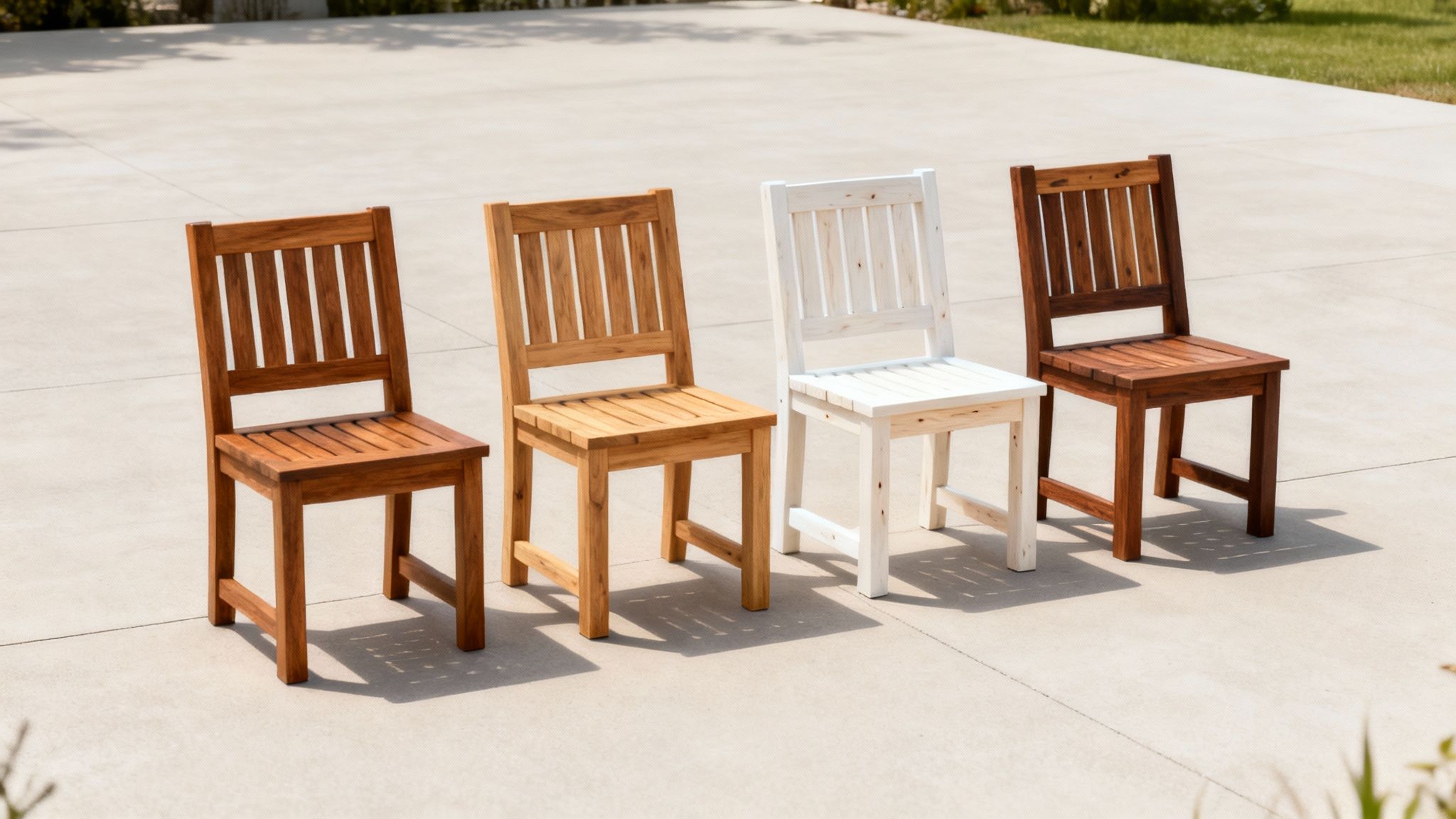
Teak: The Undisputed Champion
When you talk about outdoor furniture, Teak (Tectona grandis) is almost always the first name that comes up. It's considered the gold standard, and for very good reasons. This tropical hardwood is naturally loaded with protective oils and silica, giving it an incredible, built-in defence against water, rot, and insects. Think about it – this is the wood mariners have trusted for shipbuilding for centuries. If it can handle the open sea, it can certainly handle a bit of British drizzle.
When new, teak has a stunning honey-gold colour that feels warm and luxurious. If you leave it to its own devices, it will slowly mature over a year or so into a beautiful, silvery-grey patina. Don't worry, this is just a cosmetic shift; the wood's structural integrity remains solid as a rock. In fact, many people love this weathered look.
Teak's incredible durability does come with a hefty price tag, placing it at the premium end of the market. But what you're really doing is investing in furniture that can genuinely last a lifetime with very little fuss, making that initial cost a very smart long-term purchase.
Even with all the modern alternatives out there, teak still reigns supreme in the high-end market. It's estimated to make up around 22% of all premium wood sales for outdoor use in the UK. While that’s a slight dip from its 30% share back in 2015, its reputation for sheer quality keeps it firmly at the top for those who want the best. You can dig into more stats on the UK outdoor furniture market here.
Cedar: The Aromatic Defender
Next on our list is Cedar, a softwood that really punches above its weight when it comes to outdoor living. Its most famous trait is that lovely, distinct aroma—and it’s not just there to smell nice. The natural oils behind that scent are a powerful deterrent for insects and decay.
Cedar is significantly lighter than hardwoods like teak or oak, which is a big plus if you like to rearrange your garden layout now and then. It has a beautiful reddish-brown hue, often with lovely variations in the grain. Just like teak, it will weather to a soft grey if left untreated. The only real trade-off is that because it's a softer wood, it’s a bit more prone to dents and scratches than its tougher hardwood cousins.
- Appearance: Rich, reddish-brown tones, often with characterful knots.
- Cost: A solid mid-range option, much more affordable than teak.
- Maintenance: Needs a fresh coat of sealer or stain every couple of years to keep its colour and protect it from moisture.
- Best For: Anyone who wants a natural insect repellent and a lighter material that's easy to move.
White Oak: A British Favourite
White Oak (Quercus alba) is steeped in British history, used for everything from the ships that ruled the waves to the classic furniture that fills our homes. It’s an incredibly dense and strong hardwood with a tight grain that’s naturally resistant to water. This is thanks to something called tyloses – tiny cellular blockages that stop moisture from seeping deep into the wood.
This natural defence makes it a fantastic choice for the notoriously damp UK climate. White Oak has a classic light-to-medium brown colour and a straight grain that brings a timeless, sturdy elegance to any garden. This is a heavy, substantial wood, so you won't have to worry about your bench taking flight in a storm. It does, however, need a bit of regular maintenance to stay in tip-top shape.
Treated Pine: The Budget-Friendly Workhorse
If you're keeping a close eye on your budget, treated Pine is a wonderfully practical and affordable choice. On its own, untreated pine would rot away in no time outdoors. But thanks to modern pressure-treatment, the wood is infused with preservatives that shield it from decay and insects, giving it a surprisingly long life.
You might notice a slight greenish tint on new treated pine, which comes from the treatment process, but this fades with time. Plus, it’s incredibly easy to stain or paint to match any garden colour scheme you have in mind. While it won't ever compete with the natural durability of a premium hardwood, a well-looked-after piece of pine furniture can give you years of enjoyment for a fraction of the price. It's the perfect way to get started without a huge financial commitment.
To help you see how these woods stack up against each other, here's a quick side-by-side comparison.
Quick Comparison Of Popular Outdoor Furniture Woods
This table should give you a clear, at-a-glance idea of where each wood shines and what kind of commitment it requires, helping you find the perfect match for your garden and your wallet.
Exploring Sustainable and Eco-Friendly Wood Choices
Choosing the right wood for your outdoor furniture isn't just about how long it will last. For many of us, it's about making a choice that sits right with our values and our love for the outdoors. A beautiful garden and sustainable living go hand-in-hand, so your furniture should be part of that story. This means looking a little deeper than the grain and understanding where your timber actually comes from.
Thankfully, making a green choice is easier than ever. The demand for sustainability has really taken hold in the UK outdoor furniture market, with over 40% of British consumers now actively looking for eco-friendly products. We're seeing huge growth in furniture made from recycled and reclaimed sources, with sales climbing by around 15% per annum since 2018. In fact, by 2024, the British market for sustainable garden furniture hit an estimated £180 million. You can dig into more data on this trend from TechSci Research.
Understanding Sustainable Certifications
When you're out shopping, the simplest way to know you're making a responsible choice is to look for the FSC (Forest Stewardship Council) logo. Think of it as a seal of approval for the planet. It's a guarantee that the wood was sourced from a forest managed in a way that's environmentally sound, good for local communities, and economically sustainable.
Spotting that FSC logo gives you peace of mind. It tells you that the forest is being managed to thrive for generations to come, protecting you from accidentally supporting illegal logging or poor forestry. It ensures your beautiful new furniture doesn’t carry a hidden environmental price tag.
When you choose FSC-certified wood, you're not just buying a piece of furniture; you're casting a vote for responsible forest management worldwide. It's a simple way to ensure your purchase aligns with your values.
Innovative and Reclaimed Wood Options
Beyond newly harvested timber—even the certified kind—there are some really exciting alternatives that blend sustainability with seriously impressive performance.
One of the most talked-about is Accoya. It's a modified wood that goes through a non-toxic process called acetylation, which permanently changes its cellular structure. The result? It becomes incredibly stable and almost completely immune to rot, often lasting longer than even the toughest tropical hardwoods.
Another fantastic, character-filled option is to go for reclaimed British hardwoods. This is all about giving old timber a new beginning. Wood salvaged from dismantled barns, old industrial buildings, or even shipping pallets gets a second life instead of ending up in landfill. Not only is this the ultimate in recycling, but it also means your furniture comes with its own unique history and patina. Find out more about the creative possibilities in our guide to inspiring pallet wood projects.
Protecting Your Investment with Smart Maintenance
Picking the right wood for your outdoor furniture is a fantastic start, but it’s the care you give it afterwards that really makes it last. Don’t think of maintenance as a chore; see it as preserving the character and strength of your beautiful furniture against the unpredictable British weather. A simple seasonal routine is all it takes to keep everything looking brilliant for years to come.
The cornerstone of any good maintenance plan is regular cleaning. You don't need aggressive chemicals for this. A bit of mild soap in warm water and a soft brush will do the trick, easily getting rid of daily dust, bird droppings, and any early signs of mildew. Doing this a few times a year stops dirt from building up and keeps the wood in great shape.

Finishes Explained: Oiling, Staining, and Sealing
Once your furniture is clean, the next job is to protect it. This is where things can get a bit confusing with all the options out there. The three main choices are oiling, staining, and sealing. They all do different things, so the best one for you depends on your wood and the look you're going for.
- Oiling: Think of this as feeding the wood. Products like teak oil sink in and replace the natural oils that sun and rain wash away. This helps maintain that lovely, warm, honey-toned colour. It's perfect for dense hardwoods and should ideally be done once a year to stop the wood from going grey.
- Staining: This is your go-to if you want to add colour. Stains contain pigments that change the wood's appearance, which is great for reviving a faded piece or just for a new look. Many stains also have a sealant mixed in, giving you protection and colour in one go.
- Sealing: A sealer, such as polyurethane, forms a tough, protective film on the surface of the wood. It’s like a transparent raincoat, blocking moisture and UV rays without altering the natural colour. For maximum, heavy-duty defence against the elements, a sealer is your best bet.
When it comes to teak, deciding whether to keep its warm glow or let it weather to a distinguished silvery-grey is purely down to personal taste. If you love that elegant, aged patina, you can skip the annual oiling and just stick to cleaning. The wood is so naturally durable that it will stay strong either way.
A Seasonal Maintenance Checklist
A simple seasonal plan makes it easy to stay on top of maintenance. This way, your furniture is always ready for a sunny day and well-protected when the weather turns.
A bit of prep in the spring gets you ready for a summer of outdoor living. Give everything a good clean to wash off the winter grime. This is also the perfect time to reapply your finish, whether that's a fresh coat of oil, stain, or sealer. It can be fun to get creative; you can find fantastic deck paint ideas that you could even adapt for your furniture to tie your whole garden design together.
As autumn rolls in, it’s time to batten down the hatches for winter. If you have the space, storing your furniture in a dry garage or shed is ideal. If it has to stay outside, get some good-quality, breathable covers. Avoid cheap plastic tarps at all costs—they trap moisture underneath and can cause mould and rot, doing more harm than good. Following this simple cycle will protect your investment and ensure your furniture remains a stunning part of your garden for many seasons to come.
Making Your Final Decision with Confidence
So, you've now got a solid grasp of what makes the best wood for outdoor furniture – from its natural resilience against the elements to how much looking after it needs. The final step is simply about lining up that knowledge with your own personal situation. The real goal here is to choose furniture that you’ll genuinely love for years, not just a single summer.
To pull it all together, think of it as a balancing act between three key questions. Answering them honestly will guide you straight to the perfect wood for your garden and your life.
Your Personal Decision Framework
First, think about how you actually use your outdoor space. Are you picturing a lively hub for family gatherings and weekend barbecues, or is it more of a quiet, peaceful escape for a morning coffee? Knowing this helps define what you need from your furniture.
As more of us embrace our gardens as extensions of our homes, understanding the rise of outdoor living can give you some brilliant ideas for making the most of your space.
With that in mind, ask yourself these three final, crucial questions:
- What is my realistic budget? Be sure to think about both the initial price tag and the long-term value. A premium timber like Teak is a bigger investment upfront, but its incredible lifespan could easily save you the cost and hassle of replacements down the road.
- How much maintenance am I truly prepared to do? This is the time for total honesty. If the idea of yearly oiling and sanding feels like a dreaded chore, then a low-maintenance wood that can be left to weather gracefully is definitely your best bet.
- What look and feel fits my garden’s style? Are you drawn to the warm, golden glow of freshly treated Teak? Or perhaps the rustic, silvery charm of weathered Cedar? Maybe the classic, sturdy elegance of White Oak is what will complete your vision.
Got Questions? We’ve Got Answers
Choosing the right wood for your garden furniture can bring up a lot of questions. We get it. To help you feel confident in your decision, we've gathered some of the most common queries we hear and answered them right here.
What’s the Best Wood for the Temperamental UK Climate?
When you’re up against the UK's classic mix of drizzle and sun, you need a wood that can take a beating. The best performers are dense hardwoods that are naturally rich in protective oils.
Without a doubt, teak is the undisputed champion. Its incredible resistance to rot and moisture makes it a smart, long-term investment for any British garden. If you want something that truly lasts, teak is the way to go.
Other fantastic options include White Oak and Iroko. Their tight grain structure is brilliant at shrugging off water, and with a bit of care, they'll stand up to our unpredictable weather for years.
Can I Really Leave My Wooden Furniture Outside All Winter?
Technically, yes, especially if it’s teak. But should you? We'd advise against leaving it completely exposed. Your best bet is to invest in some quality breathable covers. This simple step shields your furniture from the harshest rain, frost, and fading from winter sun, which will seriously extend its life and save you a massive cleaning job come spring.
Here’s a crucial tip: whatever you do, avoid cheap, non-breathable plastic tarps. They're a disaster waiting to happen. They trap moisture right against the wood, creating the perfect breeding ground for mildew, mould, and rot – the very things you’re trying to prevent.
How Can I Tell if the Wood Is Sustainably Sourced?
This is a great question, and it's easier to check than you might think. The key is to look for an official certification.
- Look for the FSC Logo: The most reliable indicator is the Forest Stewardship Council (FSC) logo. Seeing this mark is your guarantee that the wood was harvested from a forest managed in an environmentally and socially responsible way.
- Just Ask: Can't find a label on the product or website? Don't be shy. A reputable seller will have no problem telling you about their sourcing policies. If they're vague or can't provide proof, it might be a red flag.