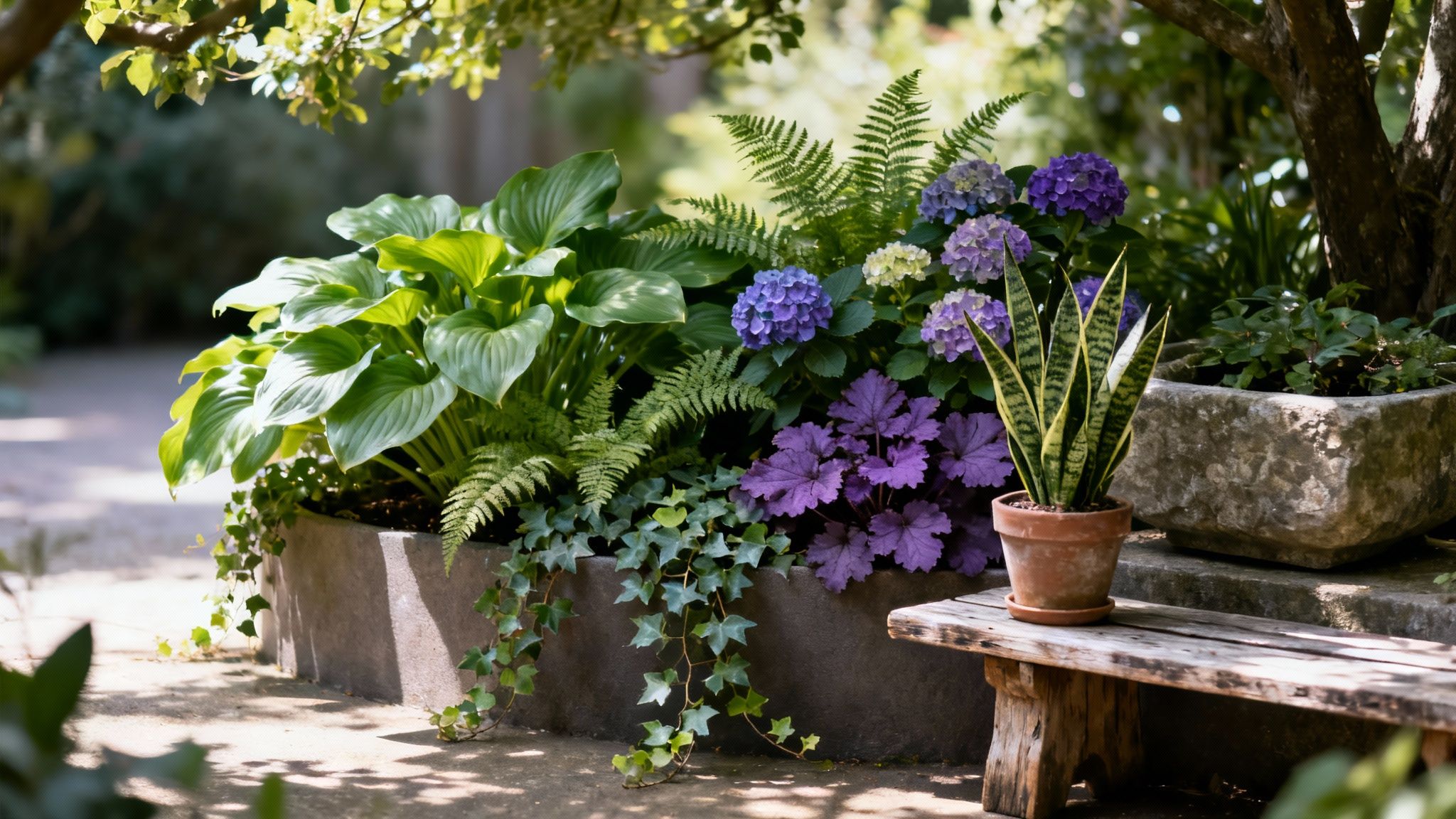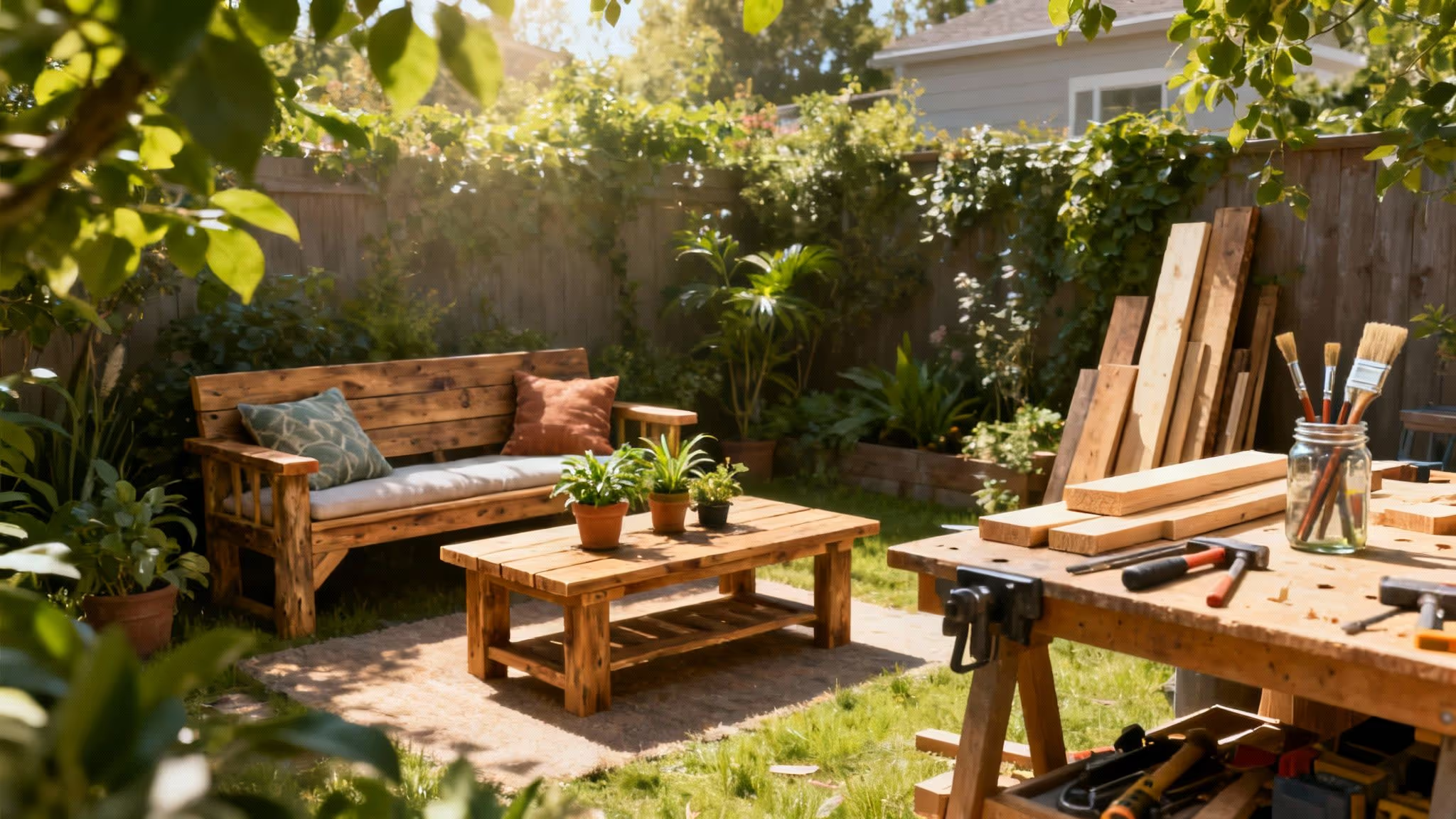
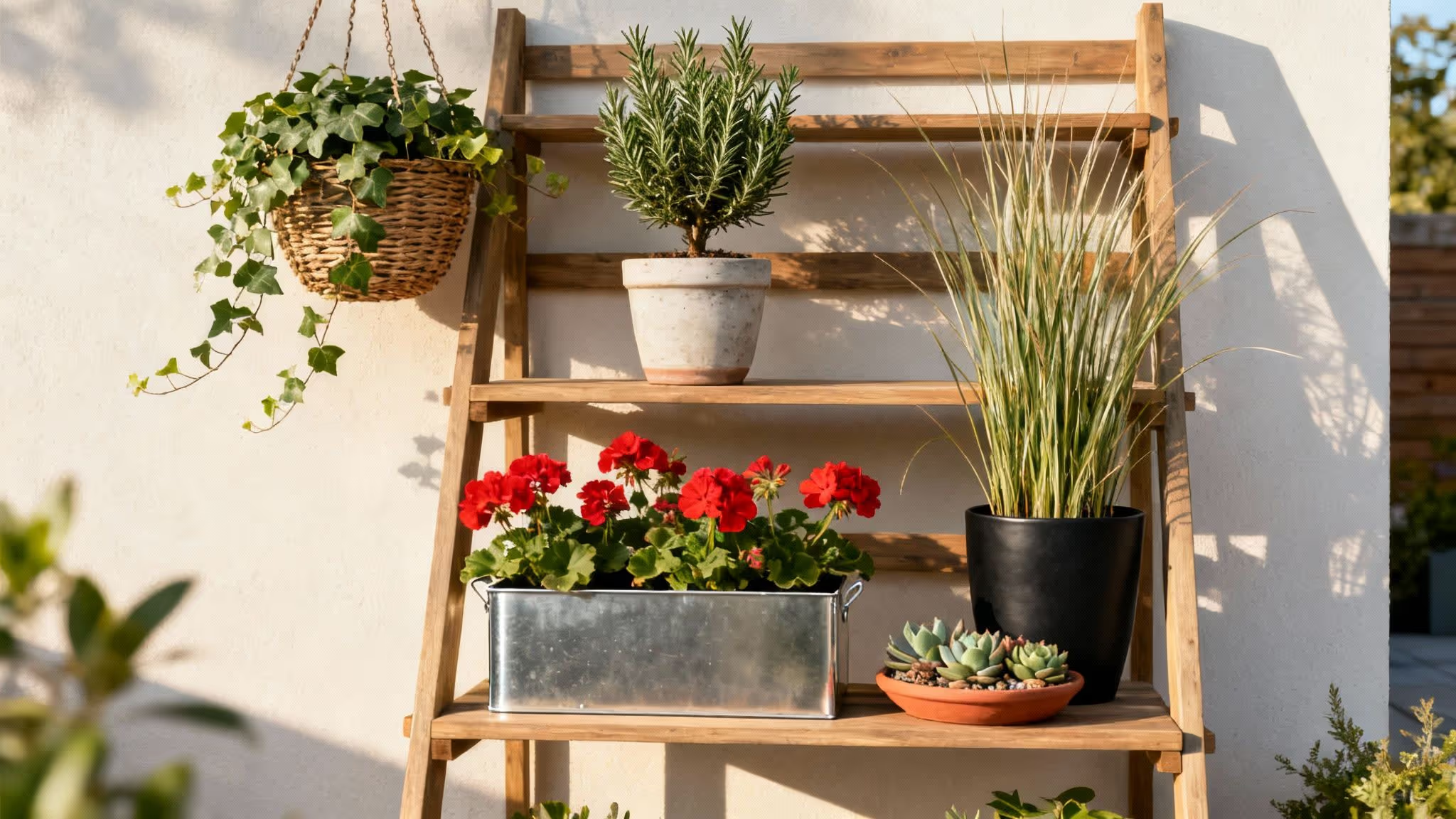
Transforming your patio from a simple outdoor area into a vibrant, living extension of your home is easier than you think. The secret lies in choosing the right greenery. This guide offers a curated collection of patio plants ideas designed to inspire, whether you're working with a sprawling terrace or a cosy balcony. We move beyond generic suggestions, providing a detailed blueprint for creating a personalised outdoor sanctuary that reflects your unique style and meets the specific conditions of your space.
This is not just a list of plants; it is a comprehensive resource organised to help you make informed decisions. We'll explore a variety of concepts, from space-saving vertical gardens that maximise small footprints to lush, tropical containers that create an exotic escape. Each idea is broken down into actionable advice tailored for every light level, container size, and maintenance preference you might have. You will find practical implementation details, specific plant profiles, and expert care tips to ensure your green additions thrive.
Our goal is to empower you to design with confidence. Discover how to layer textures for visual depth, play with colour palettes to evoke specific moods, and create a dynamic oasis that offers seasonal interest all year round. We will cover ten distinct themes, including:
- Container gardens with mixed plantings
- Vertical wall gardens and living walls
- Ornamental grasses for movement and texture
- Flowering perennials and shrubs for lasting colour
- Fragrant and sensory plants for an immersive experience
For our Spruce Collective members, we have included exclusive insights on achieving premium looks for less, along with unique styling combinations and low-cost alternatives. Let's cultivate the patio of your dreams together.
1. Container Gardens with Mixed Plantings
Container gardening is a versatile and creative way to bring life to any patio, especially where space is at a premium. This approach involves combining multiple plant varieties within a single pot or a curated group of containers to create a dynamic, multi-layered display. It offers incredible flexibility, allowing you to easily rearrange your garden, swap out seasonal plants, and control the growing environment with precision.
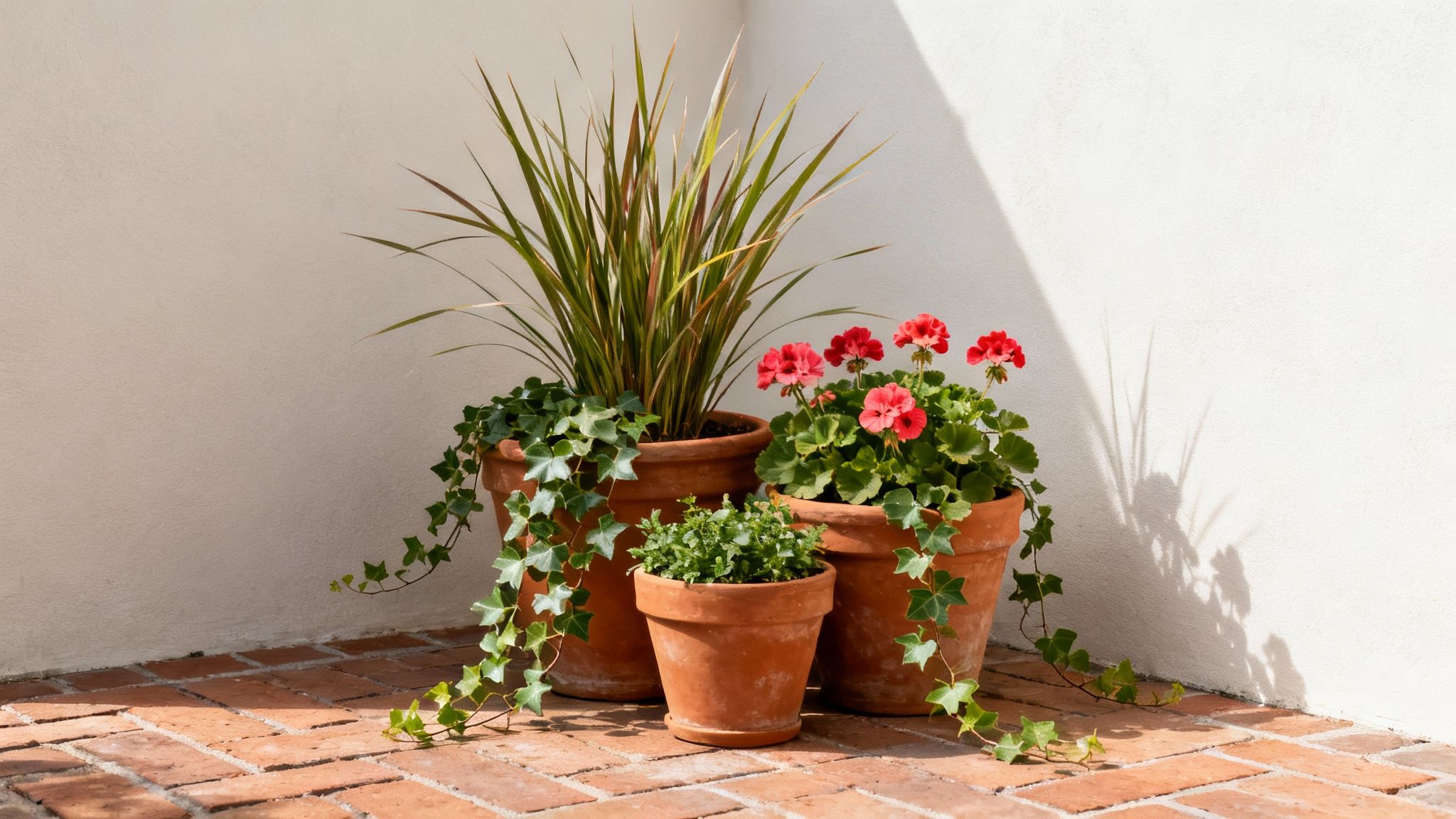
The classic formula for a successful mixed planting is the "thriller, filler, and spiller" method. The thriller is a tall, striking plant that serves as the focal point, such as a Cordyline or an ornamental grass. Fillers are mid-height, mounding plants like Petunias or Coleus that add bulk and colour. Finally, spillers are trailing plants like Ivy or Lobelia that cascade gracefully over the container's edge, softening its lines. This technique creates a balanced, professional-looking arrangement.
Why Choose Mixed Plantings?
This method is one of the most popular patio plants ideas because it allows you to craft a complete, miniature garden in one pot. It's perfect for expressing personal style, whether you prefer a minimalist succulent display in a sleek modern pot or a romantic cottage garden look with overflowing annuals. Grouping several complementary containers together can create a powerful visual impact, defining a seating area or adding a splash of colour to a dull corner.
Key Tips for Success
- Plant Compatibility: Always choose plants with similar light, water, and soil requirements to ensure they thrive together.
- Proper Potting Mix: Use a high-quality, peat-free potting compost, not garden soil, as it provides the right balance of drainage and aeration.
- Adequate Drainage: Ensure every container has drainage holes to prevent waterlogging and root rot.
- Watering and Feeding: Water deeply when the top inch of soil feels dry and feed with a liquid fertiliser every 2-3 weeks during the growing season to keep plants vigorous.
For a deeper dive into the fundamentals and to avoid common pitfalls, our comprehensive guide is an excellent resource. You can discover more about setting up your first container garden here.
2. Vertical Wall Gardens and Living Walls
Vertical gardening is an innovative solution that transforms underused walls into lush, living masterpieces. This approach maximises patio space by growing plants upwards using trellises, wall-mounted planters, or specialised living wall systems. It’s an ideal way to introduce greenery into compact urban gardens, balconies, or courtyards, creating a stunning visual feature that draws the eye skyward.
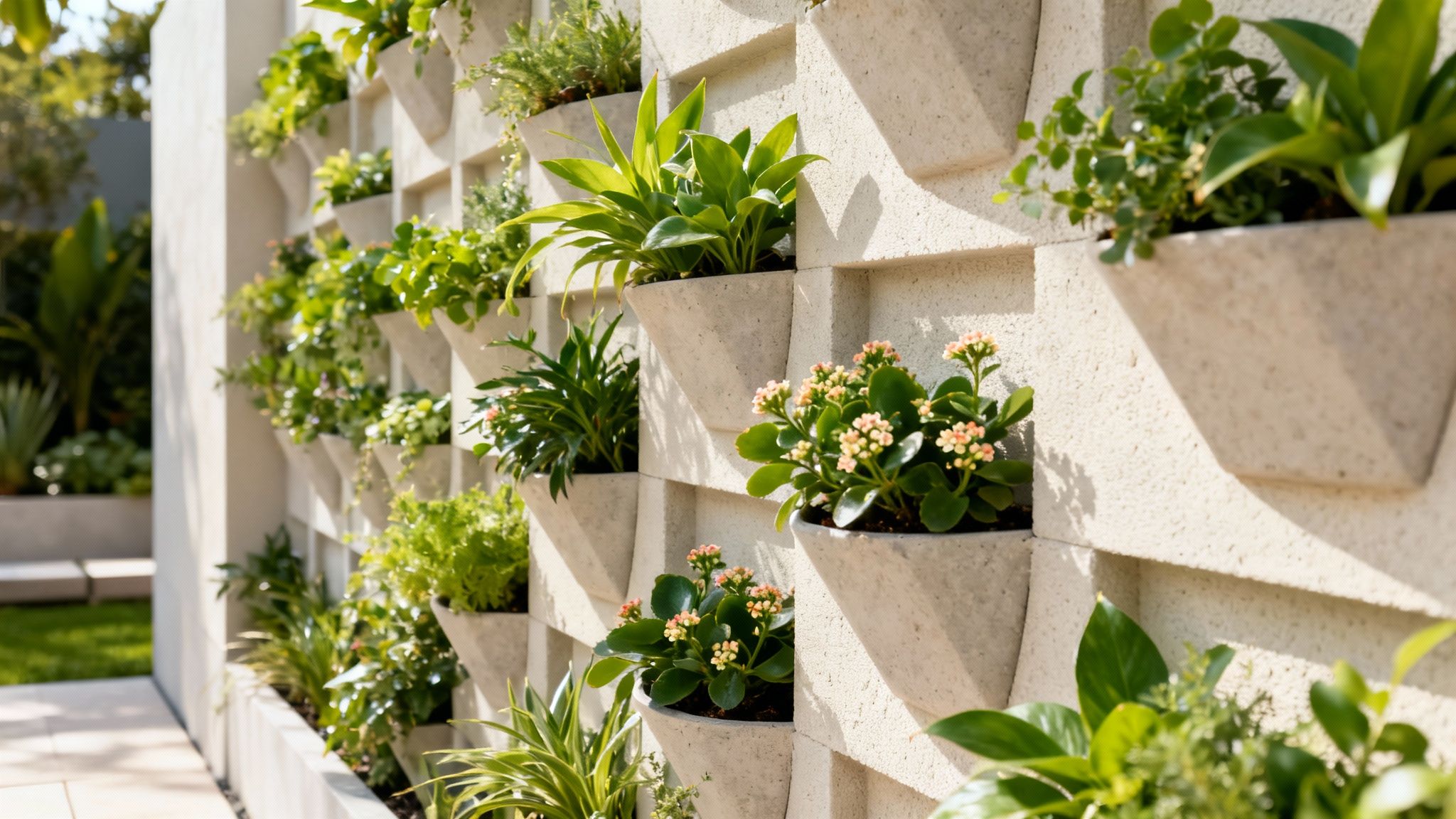
Pioneered by visionaries like Patrick Blanc, the concept ranges from simple DIY trellis setups for climbing plants like ivy or clematis to sophisticated modular systems with built-in irrigation. These living walls can be designed with a mix of ferns, succulents, herbs, or even vegetables, turning a plain brick or fence panel into a productive and beautiful garden. The result is a dynamic tapestry of colour and texture that changes with the seasons.
Why Choose a Living Wall?
This is one of the most impactful patio plants ideas for creating a 'wow' factor while being incredibly space-efficient. A living wall not only adds immense aesthetic appeal but can also improve air quality, provide a degree of insulation, and even dampen noise. It's perfect for homeowners who want to make a bold design statement, grow their own herbs within arm's reach of the kitchen, or simply screen an unattractive view with a curtain of green.
Key Tips for Success
- Assess Sunlight: Before you begin, carefully observe how much sun the wall receives throughout the day to select appropriate plants.
- Plan Irrigation: For larger installations, consider a drip irrigation system. Installing it before planting will save considerable time and effort.
- Use Lightweight Soil: A specialised, lightweight potting mix is crucial to reduce the overall weight on the wall structure.
- Choose Suitable Plants: Select species with shallow root systems that are naturally suited to vertical growth, such as ferns, heucheras, sedums, and trailing varieties.
- Monitor Moisture: Vertical gardens can dry out quickly, especially on sunny or windy days. Check the moisture levels regularly.
To explore how to integrate this stunning concept into your space, you can discover more about creating a garden wall feature here.
3. Ornamental Grasses
Ornamental grasses are an exceptional choice for adding texture, movement, and a soft, architectural quality to patios. These plants bring year-round visual interest with their elegant foliage, which often changes colour through the seasons, culminating in beautiful seed heads that persist through winter. They are wonderfully low-maintenance and can be used as striking focal points in large pots or as graceful borders to define seating areas.
Grasses offer a sensory experience unlike many other plants; their rustling sound in a gentle breeze adds a tranquil, calming atmosphere to your outdoor space. They range from compact, mounding varieties like Pennisetum setaceum (fountain grass) to towering architectural specimens like Miscanthus × giganteus. For a shimmering, airy effect, Stipa gigantea (golden oats) is unparalleled, catching the light beautifully. This versatility makes them a fantastic tool for creating dynamic, modern, or naturalistic patio designs.
Why Choose Ornamental Grasses?
This is one of the best patio plants ideas for introducing a different kind of structure and elegance. Unlike flowering annuals that provide bursts of colour, grasses offer sustained appeal with their form and texture. They pair beautifully with broad-leaved plants like Hostas or flowering perennials like Echinacea, creating a stunning contrast that highlights the best qualities of each plant. Their hardy nature and minimal care requirements make them perfect for busy gardeners.
Key Tips for Success
- Planting Time: Plant new grasses in spring to give them a full growing season to establish a strong root system before winter.
- Soil and Drainage: Most grasses thrive in well-draining soil. Use a potting mix with added grit or perlite to prevent waterlogging, especially in containers.
- Annual Cutback: To encourage fresh, healthy growth, cut back deciduous grasses in late winter or early spring to just a few inches above the ground.
- Spacing: When planting, allow for the grass's mature size to prevent overcrowding and ensure good air circulation.
- Watering: Water regularly during the first season. Once established, many ornamental grasses are remarkably drought-tolerant.
4. Raised Beds and Patio Vegetable Gardens
Bringing the allotment to your doorstep, raised beds transform a patio into a productive vegetable and herb garden. These elevated structures offer superior soil control, better drainage, and easier access for weeding and harvesting, making them a fantastic solution for urban gardening. They can be permanent fixtures or temporary setups, crafted from various materials to match your patio's aesthetic.
This approach allows you to create the perfect growing medium, bypassing poor native soil entirely. Popular materials include classic cedar wood for its natural rot resistance, sleek galvanised steel for a modern look, or durable composite materials for a low-maintenance option. Tiered or stacked designs can also add vertical interest and maximise growing space, perfect for cultivating a mix of deep-rooted vegetables like carrots and shallow-rooted lettuces or herbs.
Why Choose a Patio Vegetable Garden?
This is one of the most rewarding patio plants ideas as it combines beauty with function, providing fresh, homegrown produce just steps from your kitchen. It's ideal for those who want to control what goes into their food and enjoy the satisfaction of a harvest. A well-placed raised bed can also serve as a structural element, helping to define different zones on your patio, such as separating a dining area from a relaxation space.
Key Tips for Success
- Material Choice: Opt for cedar, redwood, or composite materials that naturally resist rot and weathering, ensuring longevity.
- Proper Foundation: Line the bottom of the bed with landscape fabric to suppress weeds while still allowing for drainage.
- Soil Mixture: Fill your bed with a high-quality mix of garden soil, compost, and vermiculite to create a rich, well-draining environment.
- Watering System: Consider installing a simple drip irrigation system to deliver consistent moisture directly to plant roots, which is crucial for vegetables.
- Crop Rotation: Plan your planting to rotate crops seasonally. This helps prevent soil-borne diseases and nutrient depletion.
To get the timing right and maximise your harvest, understanding the growing seasons is key. You can discover more about when to grow different vegetables here.
5. Flowering Perennials and Shrubs
For those seeking a more permanent and low-maintenance solution, incorporating flowering perennials and shrubs into your patio design offers lasting beauty and structure. Unlike annuals which must be replanted each year, these long-lived plants establish deep roots, return season after season, and mature over time to create a cohesive, established feel. They form the backbone of a patio garden, providing reliable colour and form with minimal fuss.
Imagine a dramatic Hydrangea in a large container providing spectacular summer blooms, or the soothing scent of Lavender wafting from a pot near your seating area. Perennials like Echinacea (coneflower) and cheerful Coreopsis (tickseed) offer vibrant, recurring colour, attracting pollinators and adding a dynamic element to your outdoor space. These plants are an investment that pays dividends in beauty and reduced effort for years to come.
Why Choose Perennials and Shrubs?
This approach is one of the best patio plants ideas for creating a stable and enduring garden design. It's ideal for homeowners who want to build a garden that evolves and improves annually, rather than starting from scratch each spring. Using perennials and shrubs in large pots can help define the boundaries of your patio, create privacy screens, or act as stunning focal points that anchor your entire outdoor design scheme.
Key Tips for Success
- Zone Appropriateness: Always choose varieties suited to your specific plant hardiness zone to ensure they survive the winter.
- Sunlight Assessment: Match your plant choices to the amount of sun your patio receives; most flowering perennials need at least 6 hours of direct sun.
- Establishment Care: Water new plants regularly during their first growing season to help them develop a strong root system.
- Maintenance: Mulch the top of the pots to retain moisture. Deadhead spent flowers to encourage continuous blooming and divide overcrowded clumps every 3-5 years to maintain vigour.
For more inspiration on pairing plants for long-lasting appeal, you can explore our ideas for beautiful garden borders here.
6. Tropicals and Exotic Plants in Containers
Transform your patio into a lush, vibrant getaway by incorporating tropical and exotic plants. This approach uses dramatic, statement-making plants like Hibiscus or Bird of Paradise in containers to create a holiday atmosphere at home. For those in cooler, non-tropical climates, container growing is the key, as it allows you to move these tender plants indoors to protect them from the winter cold.
The appeal lies in their bold forms, striking foliage, and magnificent flowers. Imagine the vibrant bracts of a Bougainvillea spilling over a wall, the huge, colourful leaves of a Canna lily adding architectural drama, or the exotic fragrance of a Plumeria filling the evening air. These plants act as living sculptures, instantly elevating the style and mood of your outdoor space and making it feel like a private resort.
Why Choose Tropical Plants?
This is one of the most exciting patio plants ideas for gardeners looking to make a bold statement. Tropicals provide an unparalleled sense of drama and escapism that few other plants can match. They are perfect for creating focal points, screening for privacy, or simply adding a touch of the extraordinary to your daily life. Their seasonal nature also offers a rewarding gardening challenge.
Key Tips for Success
- Pot Size: Choose a container that is 2-3 sizes larger than the plant's root ball to allow room for growth.
- Sunlight: Most tropical plants thrive in bright, direct sunlight, so position them in the sunniest part of your patio.
- Watering: Keep the compost consistently moist but not waterlogged during the active growing season in spring and summer.
- Feeding: Fertilise every two weeks with a balanced liquid feed while plants are actively growing to support their vigorous development.
- Winter Care: Before the first frost, move your containers indoors to a bright location, such as a conservatory or near a sunny window.
If you're inspired to create your own lush retreat, you can discover more tropical garden ideas here.
7. Succulents and Cacti Gardens
For a patio that radiates style with minimal effort, a succulent and cacti garden is an unbeatable choice. These drought-tolerant plants are celebrated for their striking architectural forms, fascinating textures, and diverse colours, making them perfect for modern, minimalist, or rustic patio designs. They thrive on neglect, making them one of the best low-maintenance patio plants ideas for busy homeowners or those in drier climates.
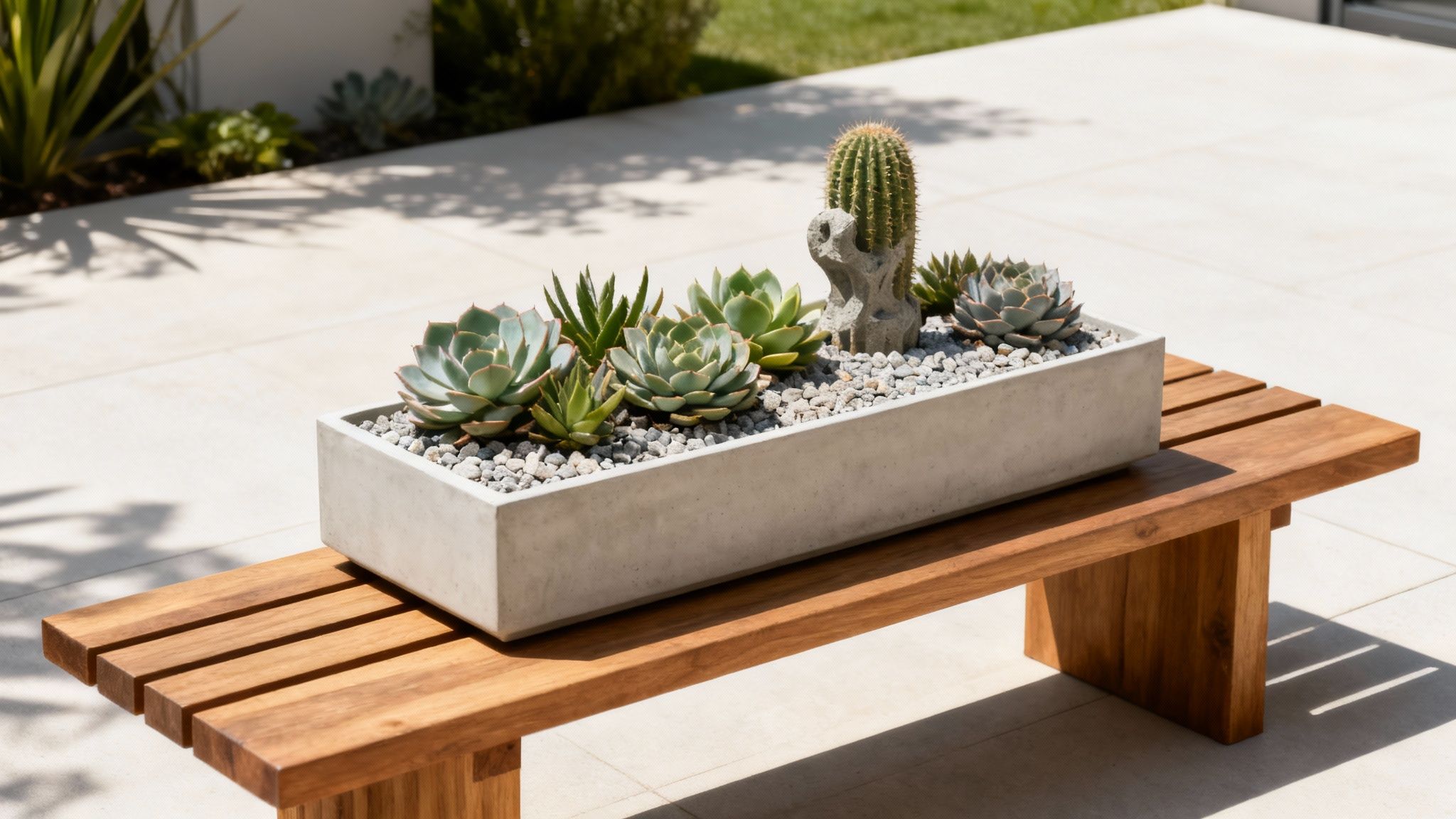
The beauty of a succulent garden lies in its composition. You can create a stunning tapestry of shapes and hues by combining different varieties. Imagine the tight, geometric rosettes of Echeveria and Sempervivum (hens and chicks) nestled beside the trailing foliage of a string of pearls or the upright, sculptural form of a small cactus. Larger specimens like an Aloe vera or a Jade plant can act as standalone focal points in a statement pot.
Why Choose Succulents and Cacti?
This approach is perfect for sun-drenched, exposed patios where other plants might struggle. Succulents and cacti are champions of water conservation, requiring infrequent watering, which is ideal for the eco-conscious gardener. Their clean lines and unique forms lend themselves beautifully to contemporary container arrangements, allowing you to create a living sculpture that evolves throughout the year. The trend, popularised on social media, showcases just how visually impactful these resilient plants can be.
Key Tips for Success
- Soil is Crucial: Use a specialised, gritty cactus and succulent compost that provides excellent drainage to prevent root rot.
- Sunlight is Essential: Provide at least six hours of direct sunlight daily for the most vibrant colours and compact growth.
- Water Wisely: Water thoroughly but infrequently. Allow the soil to dry out completely between waterings.
- Container Choice: Always select pots with ample drainage holes. Terracotta is an excellent choice as it allows soil to dry out faster.
- Frost Protection: While many succulents are hardy, tender varieties will need to be moved indoors or to a protected spot during the winter months.
8. Flowering Vines and Climbers
Flowering vines and climbers are a fantastic way to introduce vertical interest and a sense of enclosure to your patio. These plants utilise upward space, softening hard architectural features like walls, fences, and pergolas while creating a lush, green backdrop. They are perfect for adding height, providing natural shade, and screening for privacy, transforming a simple patio into a secluded garden retreat.
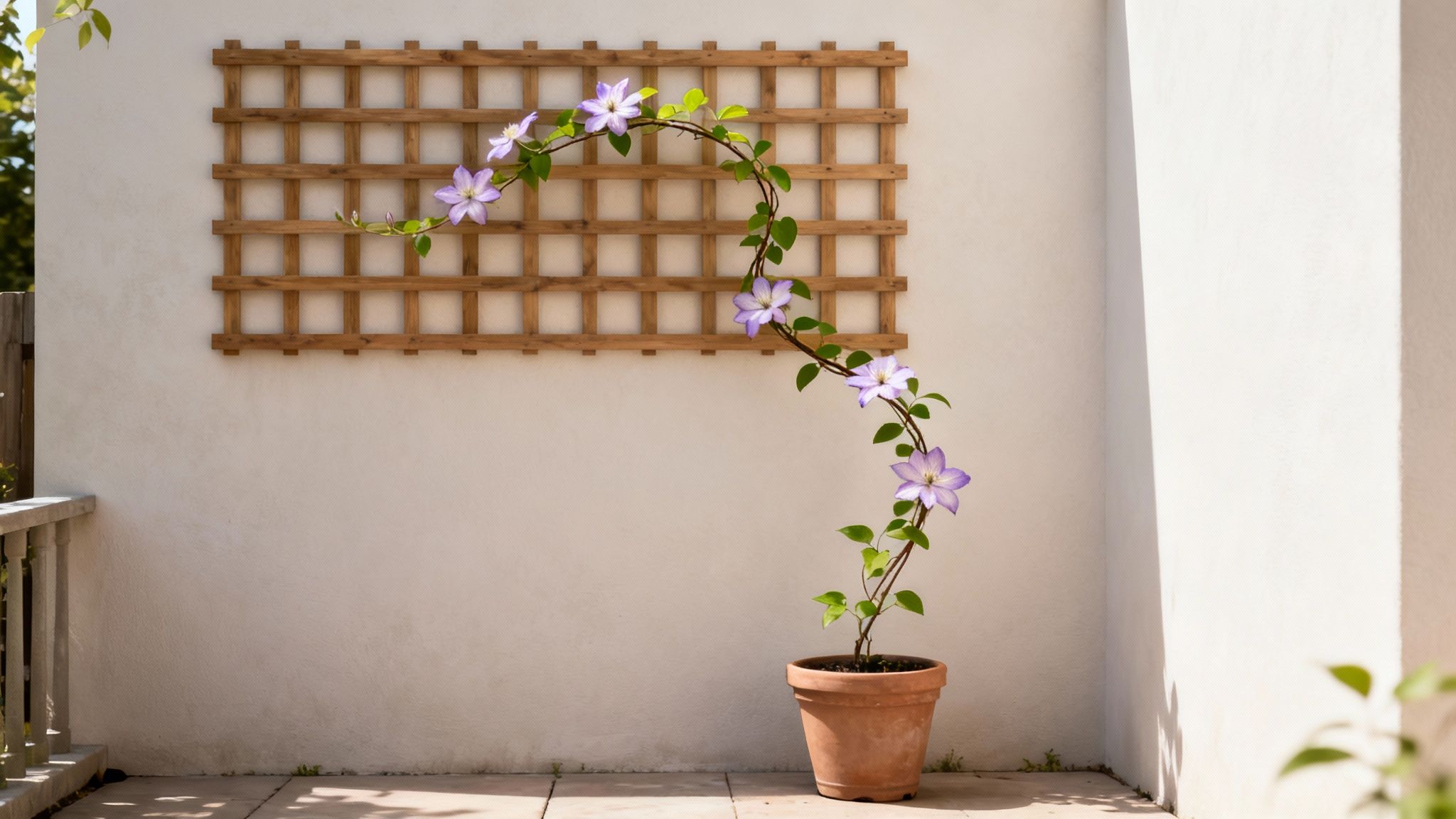
Many climbers thrive in large containers, making them accessible even without garden beds. Imagine a fragrant Jasmine twining around a doorway, an elegant Climbing Hydrangea adorning a shady wall, or an exotic Passion Flower creating a stunning focal point on a trellis. For dramatic, fragrant blooms, few plants can rival the cascading purple racemes of Wisteria, while a classic Clematis offers a huge variety of flower shapes and colours to suit any scheme.
Why Choose Flowering Vines and Climbers?
This is one of the most effective patio plants ideas for maximising greenery in a limited footprint. By growing upwards, you draw the eye vertically, making the space feel larger and more immersive. Vines can hide unsightly views, create a living wall that attracts pollinators like bees and butterflies, and provide a wonderful source of seasonal colour and fragrance, enhancing the sensory experience of your outdoor space.
Key Tips for Success
- Provide Sturdy Support: Install a strong trellis, wire system, or obelisk before you plant to give the vine a structure to grow onto from the start.
- Train Young Plants: Gently tie in new shoots to the support structure as they grow to guide them in the right direction and encourage even coverage.
- Planting Position: Plant the climber at the base of its support, angled slightly towards it, to help it attach more easily as it grows.
- Consistent Care: Water regularly, especially during the first year while the plant is establishing its root system. Prune according to the specific variety's needs, usually after flowering, to maintain a tidy shape and encourage vigorous new growth.
9. Fragrant and Sensory Plants
A patio should engage more than just the eyes. Incorporating plants chosen for their fragrance, texture, and even sound transforms an outdoor space into a complete sensory experience. This approach moves beyond purely visual appeal, creating an immersive, memorable environment that encourages relaxation and connection with nature on a deeper level.
The key is to select plants that appeal to multiple senses. Think of the classic floral perfume of Roses or Lilacs, the soothing herbal scent of Lavender, and the refreshing aroma of Mint released when its leaves are brushed. For evening enjoyment, the sweet, heady fragrance of night-blooming Jasmine or Tobacco plants can create a magical atmosphere. Beyond scent, consider the soft, velvety texture of Lamb's Ear or the rustling sound of ornamental grasses in a gentle breeze.
Why Choose a Sensory Garden?
This is one of the most rewarding patio plants ideas because it crafts an atmosphere, not just a display. A sensory garden can evoke powerful memories, reduce stress, and make your patio a true sanctuary. It’s perfect for creating intimate seating nooks where the gentle scent of flowers can be enjoyed up close, or for lining walkways where brushing past foliage releases a burst of fragrance. This approach makes your garden interactive and engaging for all ages.
Key Tips for Success
- Strategic Placement: Position fragrant plants near seating areas, windows, or doorways where their scent can be most appreciated.
- Layer Scents: Combine plants with complementary fragrances, but avoid overwhelming the space. Group strong scents like Jasmine away from more delicate ones.
- Engage with Touch: Place tactile plants like Lamb's Ear (Stachys byzantina) or soft ornamental grasses along the edges of pots and paths where they can be easily touched.
- Time Your Fragrance: Use a mix of day-scented plants and evening-scented bloomers like Nicotiana to ensure your patio is fragrant around the clock.
To learn more about creating a garden that delights all the senses, explore our guide to designing a sensory garden experience.
10. Native Plants and Pollinator Gardens
Creating a pollinator-friendly patio with native plants is an environmentally conscious approach that supports local ecosystems while offering natural, effortless beauty. This idea focuses on using plants indigenous to your region to create a habitat that attracts and sustains vital pollinators like bees, butterflies, and hoverflies. Because these plants are adapted to the local climate and soil, they typically require less water, fertiliser, and general maintenance than non-native species.
The core principle is to provide food and shelter for wildlife. Plants like Coneflowers (Echinacea), Black-eyed Susans (Rudbeckia), and New England Asters offer a succession of nectar-rich blooms from summer through autumn. For specific relationships, planting Milkweed species is essential for the lifecycle of the Monarch butterfly. This concept turns your patio into a living, buzzing ecosystem, offering a rewarding connection to the natural world.
Why Choose a Native Pollinator Garden?
This is one of the most impactful patio plants ideas for anyone wishing to make a positive ecological difference. It directly contributes to biodiversity by supporting declining pollinator populations, which are crucial for our food systems. It’s also a highly practical choice, as native plants' resilience reduces the need for chemical pesticides and excessive watering, creating a garden that is both beautiful and sustainable with minimal effort.
Key Tips for Success
- Regional Research: Identify plants native to your specific area. The Royal Horticultural Society (RHS) offers excellent regional planting guides.
- Plant in Drifts: Group at least 3-5 of the same plant species together. This creates a larger, more visible target for foraging pollinators.
- Provide Water: A shallow dish filled with pebbles and water offers a safe drinking spot for bees and other insects.
- Bloom Succession: Choose a variety of plants that will flower at different times from spring to autumn, ensuring a continuous food source.
- Avoid Pesticides: Even organic pesticides can harm beneficial insects. Embrace natural pest control methods to keep your ecosystem healthy.
Patio Plant Ideas — 10-Item Comparison
Cultivate Your Perfect Outdoor Retreat
You've explored a diverse landscape of possibilities, from the architectural elegance of ornamental grasses to the lush, vertical tapestry of a living wall. We've journeyed through fragrant sensory gardens, practical raised beds bursting with vegetables, and low-maintenance succulent displays that thrive on neglect. Each of these patio plants ideas serves as a blueprint, a starting point for transforming your outdoor space from a mere extension of your home into a vibrant, living sanctuary.
The true beauty of patio gardening lies in its infinite customisability. Your patio is a canvas, and the plants are your palette. The key takeaway from our exploration is not to replicate a single idea, but to synthesise elements that resonate with your personal style, the specific conditions of your space, and the amount of time you wish to dedicate to its care.
From Inspiration to Implementation: Your Next Steps
Moving from a well-researched list of ideas to a flourishing patio garden requires a clear plan. Let's break down the actionable steps to bring your vision to life, ensuring your efforts result in a space you'll love for years to come.
Assess and Analyse: Before you purchase a single plant, take a final, critical look at your patio. Revisit the concepts of light mapping we discussed. Where does the sun hit in the morning versus the afternoon? Are there windy corners? This foundational step is the single most important factor in ensuring your plants thrive.
Define Your Function and Style: What is the primary purpose of your patio? Is it a tranquil reading nook, a social hub for entertaining, or a productive space for growing edibles? Your answer will guide your plant selection. A fragrant garden of lavender and jasmine is perfect for relaxation, while a robust selection of flowering perennials adds a celebratory feel for social gatherings.
Create a Cohesive Plant List: Armed with your assessment and defined style, start building your plant list. Think in layers, just as an interior designer would.
- Thrillers: Tall, striking plants like an ornamental grass or a potted Japanese maple that provide a focal point.
- Fillers: Mid-sized, mounding plants such as Heuchera or Coleus that add texture and mass.
- Spillers: Trailing plants like ivy or petunias that cascade over the edges of containers, softening the look.
Start Small and Scale Up: It's tempting to try and create your perfect garden overnight. A more sustainable approach is to begin with one or two key containers or a single raised bed. This allows you to learn about your specific microclimate and your plants' needs without feeling overwhelmed. As your confidence grows, you can expand your collection.
The Lasting Impact of a Personalised Patio
Mastering the art of container and patio gardening is more than just a horticultural skill; it's an investment in your well-being. The act of nurturing plants connects us to the natural world, reduces stress, and provides a profound sense of accomplishment. Your patio becomes a personal retreat, a place to decompress after a long day, enjoy a morning coffee surrounded by life, or share moments with loved ones in a beautiful, personalised setting.
The patio plants ideas we've covered are designed to empower you to create that very space. They demonstrate that no matter the size of your patio, your budget, or your experience level, a stunning outdoor oasis is within your reach. We encourage you to be bold, to experiment with colour and texture, and to find joy in the process of creation. Your perfect outdoor retreat is waiting to be cultivated.