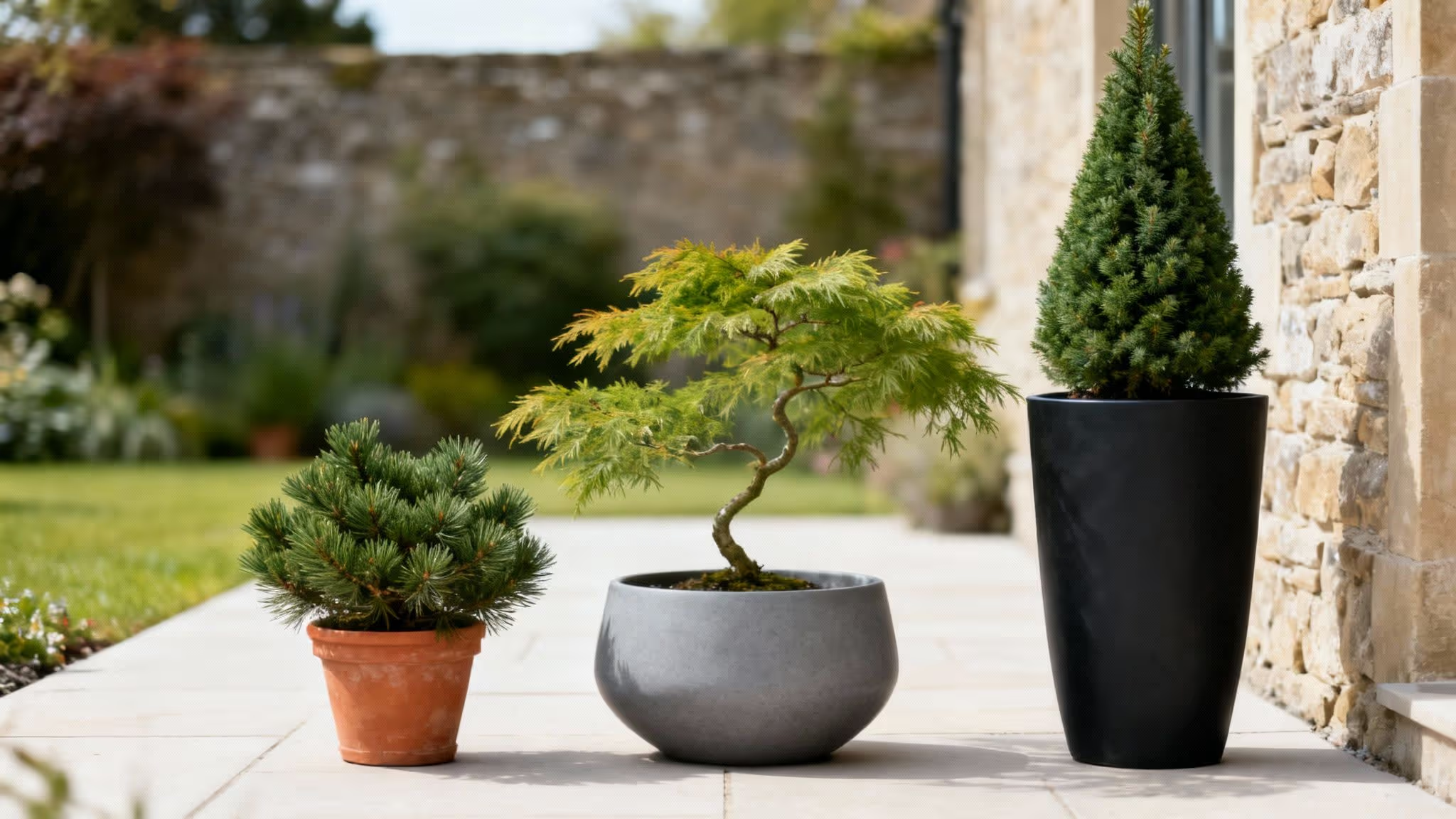
Growing conifers in pots is one of the smartest moves for adding year-round structure and colour to any UK garden, patio, or balcony. Let's be honest, they’re the reliable backbone your outdoor space needs, looking good through every single season without a fuss.
Why Potted Conifers Are Perfect for UK Gardens
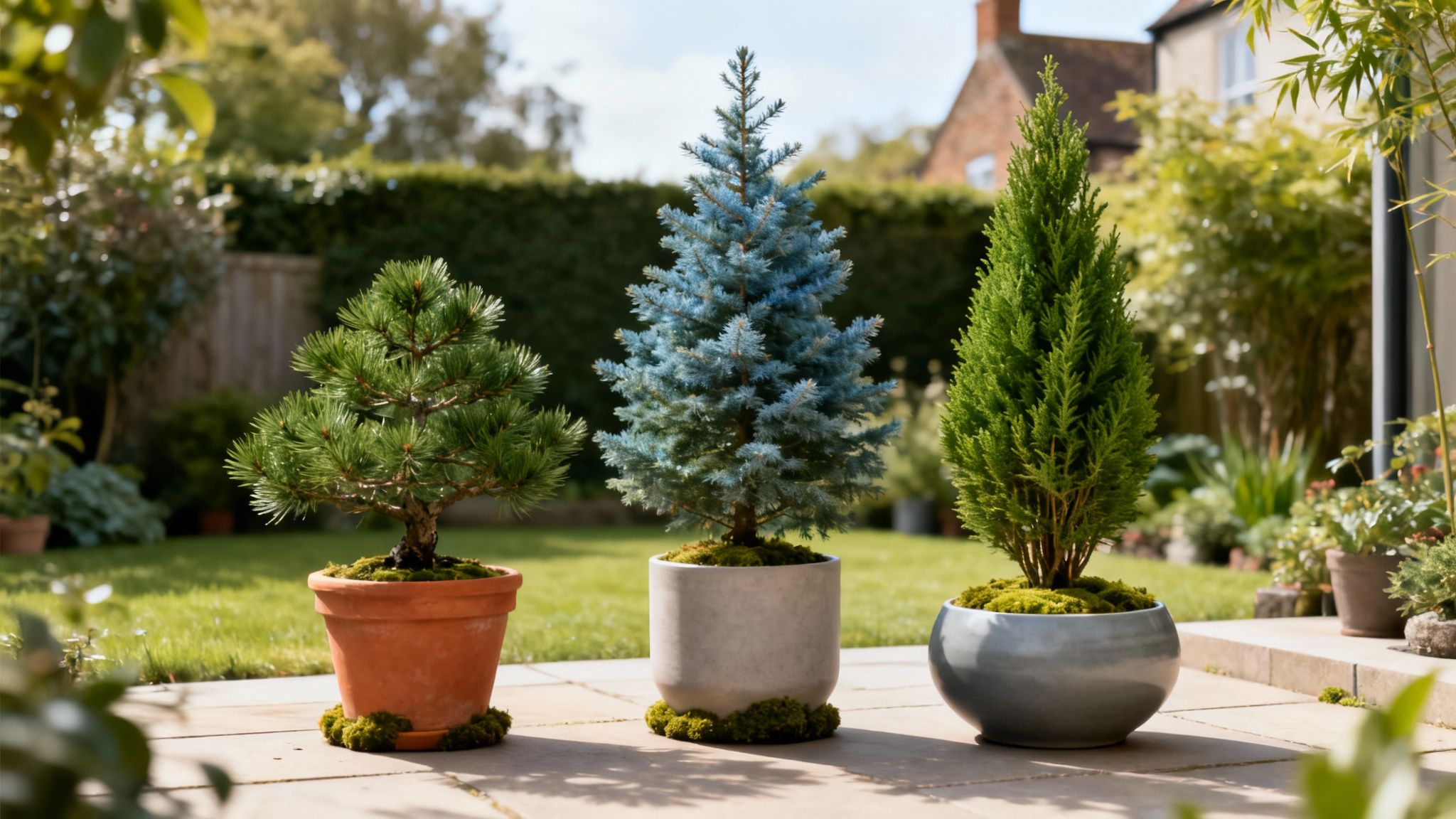
For anyone with a smaller garden, or just tricky soil, conifers in pots are a game-changer. Forget wrestling with heavy clay or chalky ground; container growing gives you complete control. It’s no wonder they’ve become the go-to for creating a lush, evergreen sanctuary, even on a tiny balcony.
And it’s not just us saying it. Garden centres have seen a 12% increase in sales of container-grown plants for 2023-2024, which has helped boost year-round greenery sales by a solid 8%. People are catching on. You can dig into the numbers yourself in the latest UK government horticultural statistics.
Unlocking Design Flexibility
The real magic of conifers in pots is what they can do for your garden's design. They're not just plants; they're living sculptures that can completely define a space.
- Year-Round Interest: When all the pretty perennials have died back for winter, your conifers will still be standing strong, providing that vital pop of colour and shape when the garden feels bare.
- Low Maintenance: So many of the dwarf and slow-growing types need very little pruning once they’re settled in, making them a dream for busy gardeners.
- Move Them Around: Fancy a change? Just rearrange the pots. You can shuffle things around to refresh your patio’s look, move plants into a more sheltered spot for winter, or chase the perfect patch of sun.
- Architectural Shapes: From the sharp, upright form of a ‘Skyrocket’ Juniper to the soft, weeping habit of a dwarf Cedar, there’s a conifer out there to match any style you’re going for.
Choosing to grow conifers in containers isn’t just about planting a tree. It's an investment in a long-lasting, adaptable feature that brings life and a touch of class to your outdoor space, no matter its size.
This adaptability makes them a real cornerstone of modern garden design. Whether you’re framing a doorway, adding a bit of height to a flowerbed, or creating a quiet corner on a balcony, potted conifers deliver big on beauty with minimal effort.
For more inspiration, check out our guide on how to garden with potted plants. They really do set the stage for a garden that looks fantastic all year long.
How to Select the Right Conifer for Your Pot
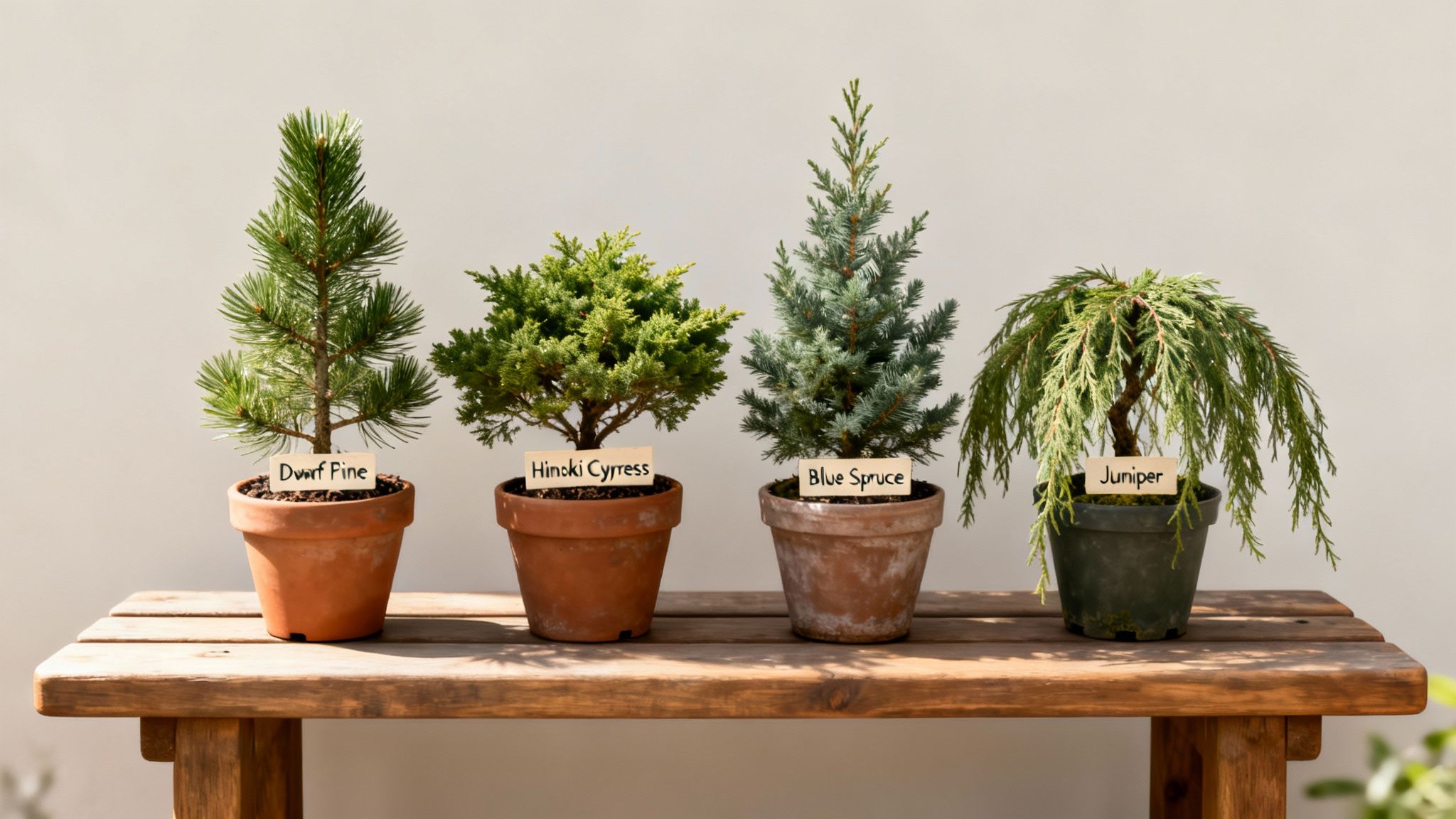
Choosing the right conifer for your pot is easily the most crucial decision you'll make. A little forward-thinking at the garden centre prevents that classic mistake: picking a beautiful but fast-growing tree that overwhelms its container in a couple of seasons.
The secret? Look for dwarf and slow-growing varieties. These compact gems are bred specifically for contained spaces, maintaining their shape and scale without needing aggressive pruning. They typically grow just 1-6 inches (2.5-15 cm) per year, making them perfectly suited for a long and happy life on the patio.
Match the Conifer to Your Space
Before you fall for a particular plant, have a good look at its future home. The amount of sun your patio or balcony gets will dictate which conifers will thrive and which will merely survive. Getting this right from the start is half the battle.
For Sun-Drenched Spots: If your space gets six or more hours of direct sun, you're in luck. Dwarf Mountain Pines (Pinus mugo), sprawling Junipers, and many Blue Spruces absolutely love soaking up the rays. You’ll often find their foliage colour becomes even more vibrant with plenty of light.
For Shady Corners: Finding plants for shadier areas can feel tricky, but certain conifers excel there. Hinoki Cypress (Chamaecyparis obtusa) and some varieties of Yew (Taxus) are brilliant choices, offering deep green, textured foliage that won't get scorched.
Consider Shape and Form
Next, think about the role you want your conifer to play. Are you after a bold, architectural statement piece, something soft and textural, or a plant that will gracefully spill over the edge of the pot? The natural growth habit is key.
Upright Varieties: Perfect for creating a sense of height or framing a doorway. A pair of slender conifers like Juniperus scopulorum 'Blue Arrow' can act as elegant, year-round exclamation marks in your container display.
Mounding or Spreading Types: These are ideal for adding soft texture. A Dwarf Mugo Pine (Pinus mugo 'Mops') creates a lovely rounded shape, while a spreading Juniper can cascade gently over the pot's rim, softening the edges.
Weeping Forms: For a touch of drama, a weeping conifer is hard to beat. A Weeping Blue Atlas Cedar (Cedrus atlantica 'Glauca Pendula') in a tall pot makes a stunning, sculptural focal point that draws the eye.
Expert Tip: Always, always check the plant's label for its 10-year growth estimate. This simple step gives you a realistic idea of its mature size and stops you from buying a plant that will outgrow its home in a flash.
For more foundational tips, our guide on container gardening for beginners is a great place to get started.
Top Dwarf Conifers for UK Pots
To help narrow down the options, here’s a quick-reference guide to some of the most reliable dwarf conifers that perform brilliantly in UK pots. Think of it as a cheat sheet to find the perfect match for your garden's style and conditions.
By choosing a conifer whose needs and eventual size align with your space, you’re setting yourself up for years of enjoyment. This little bit of planning ensures your potted conifer remains a beautiful, healthy, and perfectly proportioned feature in your garden.
Potting Your Conifer for Long-Term Success

You’ve found the perfect slow-growing conifer; now for the fun bit. Getting the potting right isn’t just about ticking a box – it’s the foundation for decades of healthy growth. A good start now saves you from a world of trouble later, from waterlogged roots to sad, yellowing needles.
This isn't a race. Taking a bit of extra care at this stage pays off massively, ensuring your conifers in pots become lasting features, not short-lived disappointments. We’ll cover choosing the right home, mixing the perfect soil, and the actual planting itself.
Choosing the Right Container
The pot you pick is more than just a pretty holder; it's your conifer’s entire world. Three things are absolutely non-negotiable: the material it’s made from, its size, and how well it drains. Get these right, and you're halfway there.
Material Matters: There’s a reason terracotta is a classic. It’s porous, so it lets the soil breathe and moisture evaporate, which is a big win against root rot. The downside? It can crack in a harsh UK frost unless you buy a ‘frost-proof’ version. Glazed ceramic or sturdy plastic pots are less breathable but hold onto moisture better, which can be a bonus in summer.
Size It Up: It’s tempting to put a small plant in a massive pot, thinking it’ll “grow into it.” Don't. A pot that's too big holds a huge amount of soil that stays wet for ages, creating the perfect conditions for roots to rot. The sweet spot is a pot just 2-4 inches wider in diameter than the plant’s current root ball.
Drainage is Everything: This is the golden rule of container gardening, full stop. Your pot must have at least one decent-sized drainage hole, and more is always better. Without it, water pools at the bottom, suffocating the roots and slowly killing the plant. It's that simple.
A common mistake is adding a layer of broken pot pieces (crocks) or gravel at the bottom, thinking it helps drainage. It actually does the opposite. It can create a ‘perched water table’ where water gets trapped just above the gravel, keeping the roots constantly soggy. A good, gritty soil mix all the way through is a much better bet.
Crafting the Perfect Soil Mix
Step away from that bag of standard multi-purpose compost. While it’s fine for summer bedding, it’s not built for the long haul. It compacts over time, loses its structure, and becomes a dense, airless block – everything a conifer hates.
For conifers in pots, you need something more robust and free-draining. The goal is a mix that gives roots a firm anchor, holds just enough water, but lets the excess drain away freely. I’ve found a simple, tried-and-tested recipe works wonders in our UK climate.
The Ideal Conifer Potting Mix:
- Two parts John Innes No. 3 compost: This loam-based formula is fantastic. It gives the mix structure, weight, and a slow, steady supply of nutrients.
- One part horticultural grit or perlite: This is the secret to good drainage. It creates tiny air pockets throughout the soil, stopping it from turning into mud after a downpour.
Just tip it all into a wheelbarrow or onto a tarp and give it a good mix before you start potting. This custom blend creates the perfect environment for a strong, healthy root system.
The Planting Process
With your pot and soil sorted, it’s time to get your conifer settled in. A gentle touch and correct positioning are all it takes.
Prep the Pot: If the drainage hole is massive, you can place a single piece of crock over it to stop soil washing straight out. Add a layer of your soil mix, enough so that when you place the conifer on top, the surface of its root ball sits about an inch below the pot’s rim.
Tease the Roots: Carefully slide the conifer out of its nursery pot. If the roots are a tight, circling mass (what gardeners call 'pot-bound'), you need to gently loosen them. Use your fingers to tease out the roots at the bottom and sides. This encourages them to grow out into the fresh soil instead of just carrying on in a spiral.
Position and Backfill: Pop the plant in the centre of the pot, checking it’s standing straight. Start filling in around the sides with your soil mix, gently patting it down with your fingertips to get rid of any big air gaps. Don't press it down too hard, though.
Final Touches: Keep filling until the soil is about an inch from the top of the pot – this little gap stops water and soil spilling over the edge every time you water. Now, give it a really good drink, watering until you see it running out of the bottom. This first soak is crucial for settling the soil properly around the roots.
The basic steps here are pretty universal for most plants. For a more detailed look at the hands-on techniques, our general guide on how to repot houseplants breaks down these core skills nicely.
A Year-Round Care Plan for Potted Conifers
Once your conifer is settled in its new pot, the real work begins. Well, not work exactly. The good news is that keeping conifers in pots happy isn't about constant fussing; it’s more about tuning into their simple, seasonal rhythm. A little attention at the right moments is all they need to stay vibrant for years.
This year-round guide breaks down the four pillars of container conifer care: watering, feeding, pruning, and knowing when it's time for a bigger home.
Mastering the Art of Watering
This is where most people go wrong with container plants. Forget what you know about garden soil; pots are far less forgiving. A conifer in a container relies entirely on you, and finding that sweet spot between drought and drowning is everything.
The golden rule is the ‘drench and dry’ method. Ditch the daily splash-and-dash. Instead, water thoroughly until you see it running freely from the drainage holes, making sure the entire root ball gets a good soak. Then comes the important bit: let the top couple of inches of compost dry out completely before you even think about watering again.
Not sure when that is? The finger test is your best friend here. Just poke your finger about two inches deep into the compost. If it feels dry, it’s time for a drink. If it feels damp, hold off for another day or two. Simple.
A Seasonal Feeding Schedule
Plants in pots are on a restricted diet, with access only to the nutrients you provide. A simple feeding schedule is key to fuelling their growth and keeping that foliage looking lush and healthy.
Spring (March-April): This is their main mealtime. As the days get longer and you spot new growth, your conifer is getting hungry. Apply a slow-release granular fertiliser made for trees and shrubs (a balanced feed like Growmore works well too). Think of it as a packed lunch that will release nutrients steadily over the next few months.
Summer (May-August): If your conifer is looking a bit tired, a mid-season boost with a liquid seaweed feed once a month can perk it up. Honestly, though, if you used a decent slow-release feed in spring, you can probably skip this. Over-feeding just encourages weak, sappy growth that’s more vulnerable to pests.
Autumn & Winter (September-February): Time to stop. Your conifer is heading into dormancy, and feeding now would only encourage soft new growth that will get zapped by the first frost. Let it rest.
Remember, the goal isn't to force rapid growth. It's about supporting a steady, healthy plant that has better colour, density, and natural resilience against pests and diseases.
Pruning and Shaping for Health and Style
Part of the appeal of dwarf conifers is that most need very little pruning. The aim is simply to maintain their natural shape, snip out any dead or damaged bits, and encourage a dense, compact form.
The best time for a trim is generally in late summer or early autumn, which gives any cuts plenty of time to heal before winter bites.
Always use a clean, sharp pair of secateurs or shears. For most varieties, a light clipping of the current season's growth is all that’s needed. Whatever you do, avoid cutting back into the old, brown wood – many conifers won’t regrow from it, and you’ll be left with permanent bald patches.
If a branch has died back, just trace it back to a healthy green shoot or the main stem and snip it off there. Regular light trims are always better than one drastic haircut. Keeping on top of these little jobs is much easier with a plan; for a bird's-eye view of your garden to-do list, our UK gardening calendar can help you stay organised all year round.
Knowing When to Repot
Even the most slow-growing conifer will outgrow its home eventually. Repotting every 2-4 years gives the roots fresh, nutrient-rich soil and more room to stretch out. Skip this, and you’ll end up with a stressed, root-bound plant that can’t take up water or nutrients properly.
Keep an eye out for these tell-tale signs:
- Roots are poking out of the drainage holes.
- Water rushes straight through the pot without really soaking in.
- Growth has slowed right down or stopped altogether.
- The plant just looks too big for its pot and seems a bit top-heavy.
The best time to repot is during a quiet spell, either in early spring or early autumn. Choose a new pot that is only one size bigger—about 2-4 inches wider in diameter. A pot that's too big can leave the roots sitting in cold, wet soil, which is a recipe for root rot. Just follow the same potting steps you used the first time, and your conifer will thank you with a fresh burst of life.
Designing and Styling with Potted Conifers
Now that you’ve got the practical side of things sorted, it’s time for the fun part: thinking like a designer. Potted conifers are so much more than just plants; they're your secret weapon for shaping the entire feel of your outdoor space.
Think of them as architectural elements. They can set a mood, solve a design dilemma, or just bring a touch of class to a patio, balcony, or front step. The right conifer in the right pot can turn a forgotten corner into something that looks completely intentional and styled.
Creating a Grand Entrance
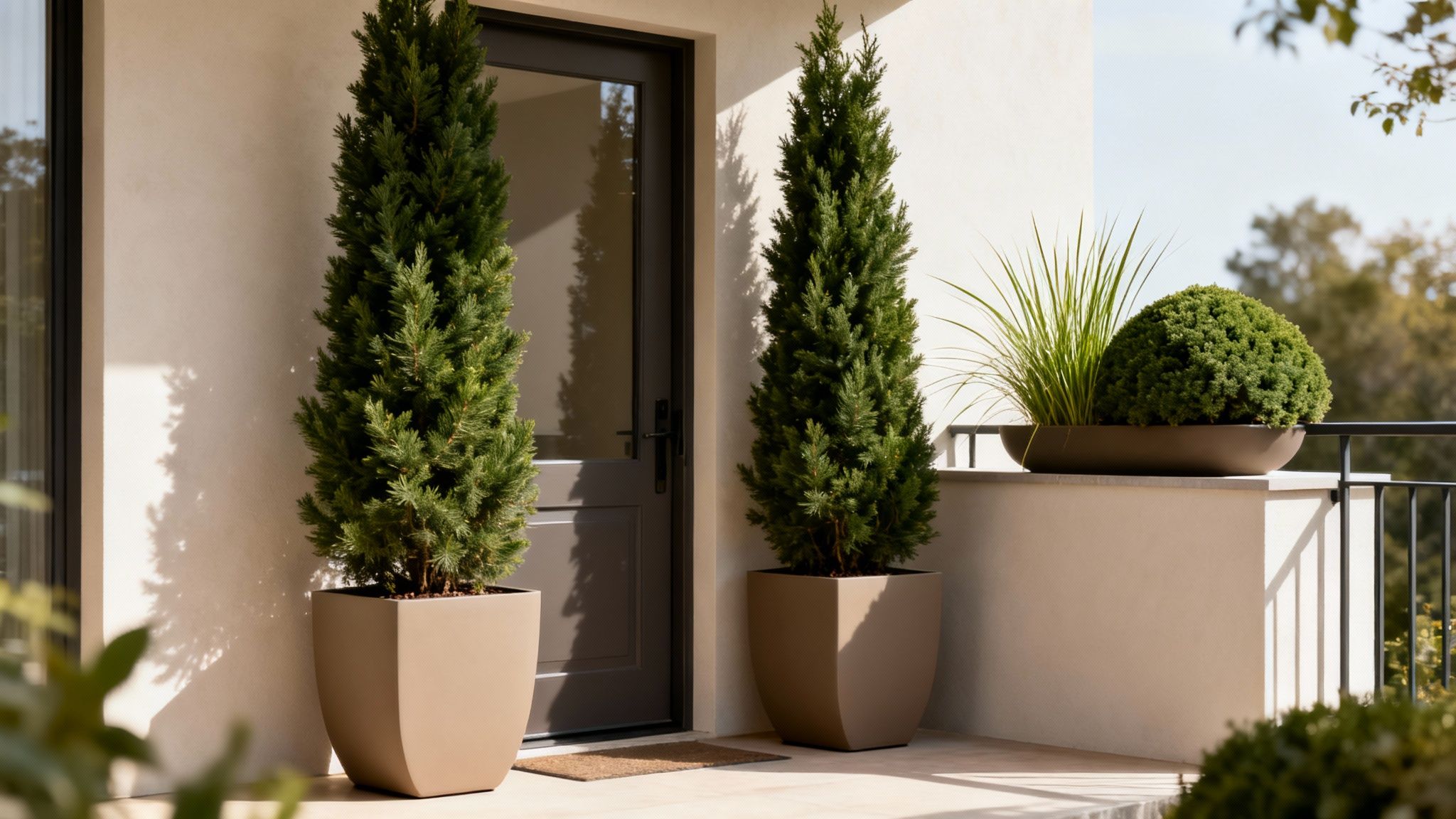
One of the most classic (and for good reason, effective) ways to use conifers in pots is to frame a doorway. It’s a simple move that instantly makes a home feel more formal and welcoming.
- Symmetry and Form: For that timeless, elegant look, you can't beat a pair of identical, upright conifers. Slender varieties like Juniperus scopulorum 'Blue Arrow' or Thuja occidentalis 'Smaragd' are perfect. Pop them in matching tall, simple pots and they stand like sentinels, drawing the eye right to your front door.
- Asymmetrical Balance: If rigid formality isn't your thing, go for a more relaxed vibe. Try a tall, upright conifer on one side of the door and a lower, mounding one on the other. It still feels balanced but has a bit more personality and visual intrigue.
Using potted conifers to create focal points is such a powerful design trick. They grab your attention and provide a year-round structural anchor that other, more fleeting plants can revolve around.
Building a Layered Landscape in Miniature
Pots give you the freedom to create a complex, layered garden scene, even on the tiniest of balconies. Think of your patio as a blank canvas and your potted conifers as the stars of the show. By mixing different shapes, textures, and colours, you can create a real sense of depth.
Imagine creating a peaceful, Japanese-inspired corner. You could group a weeping Dwarf Blue Atlas Cedar in a big statement pot with a low, spreading Dwarf Mugo Pine and a fine-textured Hinoki Cypress. That simple combination of different forms is enough to create a tranquil, multi-layered vignette.
Companion Planting for Dynamic Displays
While conifers are stunning on their own, they really come alive when you add companion plants. This is your chance to bring in seasonal colour and softer textures that contrast beautifully with the conifer’s strong, evergreen form.
A few great companions for potted conifers:
- Grasses: Ornamental grasses like Carex 'Evergold' or the dramatic black Ophiopogon planiscapus 'Nigrescens' offer a gorgeous textural contrast and will soften the pot's edge as they trail over.
- Perennials: You can't go wrong with Heucheras. They come in a massive range of foliage colours, from deep purples to zesty lime greens, which can echo the tones in your conifer's needles.
- Seasonal Colour: For winter interest, tuck in some pansies or cyclamen. In summer, go for vibrant trailing calibrachoa for a big splash of colour. The conifer acts as the perfect evergreen backdrop.
By playing with these combinations, you can create a display that feels cohesive and thoughtfully put together. If you're looking for more inspiration, you'll find plenty in our guide to patio plants ideas. The trick is to see your potted conifers not just as plants, but as the foundations of your outdoor design.
Your Potted Conifer Questions, Answered
Even the most seasoned gardeners run into questions, especially when it comes to keeping conifers happy in containers. Think of this as your go-to troubleshooting guide for those common head-scratchers.
We’ll cover everything from picking the right plant in the first place to knowing when it's finally outgrown its home. Getting these details right makes all the difference, so let's jump in.
What are the best small conifers for pots in the UK?
The secret here is to look for dwarf or slow-growing varieties. Don't be tempted by that cute, little, fast-growing number at the garden centre – it’ll outgrow its pot before you know it. Stick with plants bred to stay compact.
Some of our foolproof favourites include:
- Pinus mugo 'Mops' (Dwarf Mountain Pine): A brilliant, tough-as-nails pine that forms a dense, satisfyingly round mound of green.
- Thuja occidentalis 'Danica': Creates a perfect little emerald-green globe with soft foliage. It's incredibly neat and tidy all year round.
- Chamaecparis obtusa 'Nana Gracilis' (Hinoki Cypress): For something a bit more sculptural, this one has gorgeous, fan-like sprays of dark green foliage.
- Picea glauca 'Conica' (Dwarf Alberta Spruce): It's a classic for a reason. This spruce grows into a perfect mini Christmas tree shape, ideal for adding a touch of formality to a patio.
Here’s a pro tip: when you’re at the garden centre, always hunt down the plant label and check its estimated 10-year growth size. It’s the single best way to avoid planting a future giant in a tiny pot.
How often should I water my potted conifer?
Forget rigid schedules – there's no magic number. How often you water depends entirely on the weather, the pot's size and material, and the plant itself. The best tool you have is your own finger.
Get into the habit of poking your finger about two inches into the compost. If it feels dry, it's time for a drink. If it’s still damp, leave it for another day or two.
When you do water, give it a proper drench until you see water running out of the drainage holes. This ensures the entire root ball gets saturated. In a summer heatwave, this might mean watering every couple of days; in a damp winter, it could be as little as once every few weeks.
When is the best time to repot a conifer?
Repotting is key to long-term health, and you’ll likely need to do it every 2-4 years. The sweet spot for this job is during the plant's downtime – either early spring just before new growth starts, or in early autumn when things are winding down. This helps the plant avoid the stress of scorching summer heat or deep winter frosts.
So, how do you know it's time? Look for the tell-tale signs. Are roots peeking out of the drainage holes? Has growth slowed to a crawl? Does water seem to pour straight through the pot without soaking in? Those are all cries for a bigger home.
When you do move it, only go up one pot size – about 2-4 inches wider in diameter. A pot that's too big can lead to a mass of cold, wet soil, which is a fast track to root rot.
Can I keep a potted Christmas tree alive after the holidays?
Yes, you can! But success is all about managing the transition from your warm living room back to the great outdoors. A living tree, like a potted Norway Spruce or Nordmann Fir, can only handle being inside for a short stint.
Aim to keep it indoors for a maximum of 10-12 days. Make sure it's in the coolest spot you have, far away from radiators and fireplaces, and never let the soil dry out.
After the tinsel comes down, the acclimatisation process begins. Don't just turf it straight out into the freezing cold. Move it to a cooler spot like a porch for a few days, then into a sheltered garage or shed for another week. This gentle reintroduction prevents shock and gives it the best possible chance of survival, ready to live happily in its pot on the patio.