
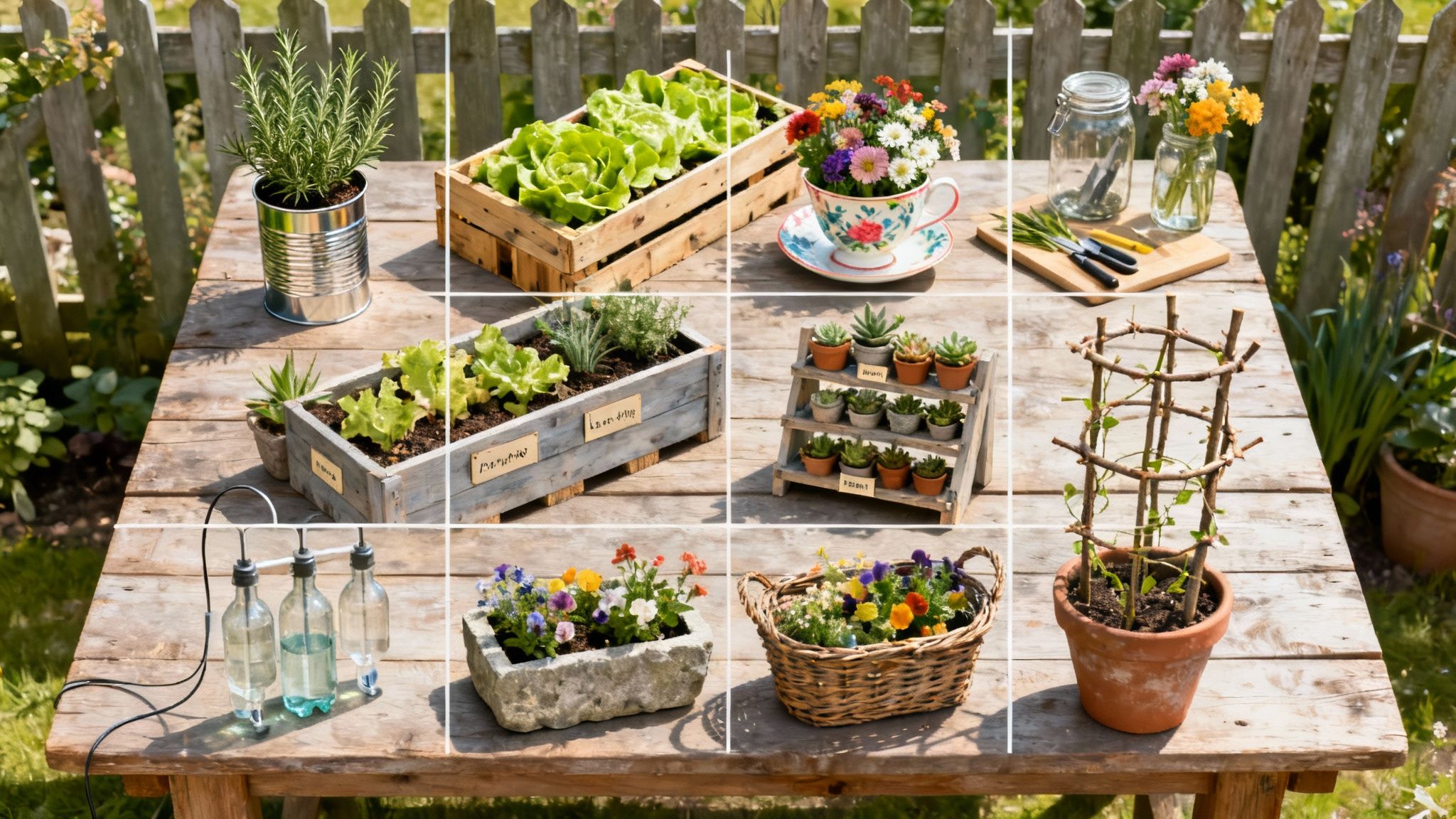
Dreaming of a beautiful garden but worried about the cost? You're not alone. Many people in the UK believe that creating a stunning outdoor space requires a significant financial investment. However, with a little creativity and resourcefulness, it is entirely possible to cultivate a green sanctuary that is both beautiful and budget-friendly. This guide is packed with practical, actionable garden ideas on a budget UK homeowners can implement immediately. Forget expensive garden centre trips and professional landscapers; this is about clever, hands-on solutions.
We will explore everything from growing new plants from kitchen scraps to building raised beds with reclaimed materials. You will learn how to make your own nutrient-rich compost, propagate plants from seeds and cuttings, and find free sources for essential materials like mulch. We'll also cover smart planting strategies, such as using perennials for long-term colour, and show you how to set up simple water-harvesting systems. Each idea is designed to be affordable, sustainable, and perfectly suited to the British climate. Prepare to transform your outdoor area into a flourishing oasis without straining your finances, proving that a gorgeous garden is achievable for everyone, regardless of budget.
1. Grow Vegetables from Kitchen Scraps
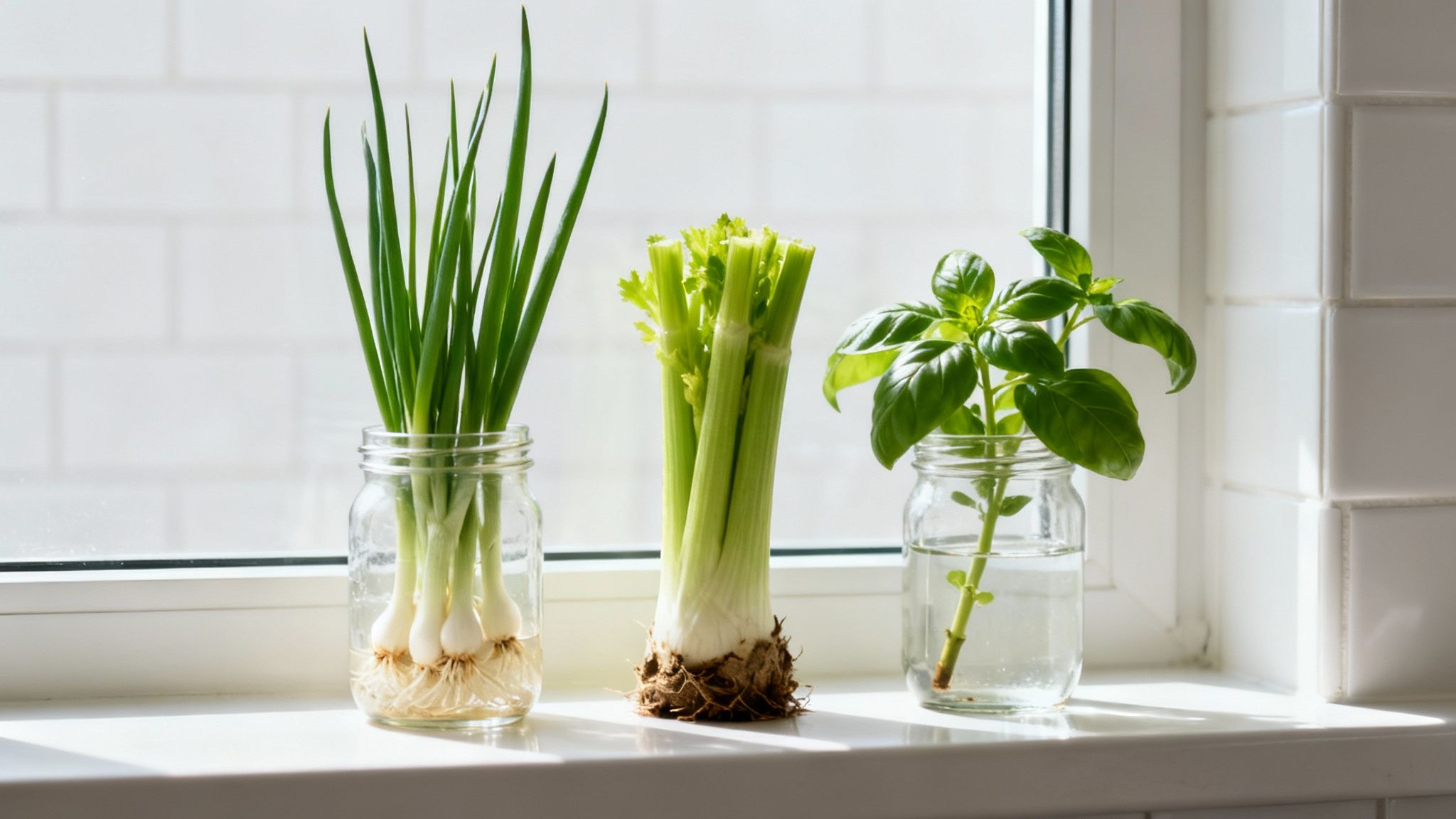
Turn your kitchen waste into a continuous supply of fresh produce with one of the most cost-effective garden ideas on a budget UK gardeners can try. Instead of composting or binning the ends of vegetables, you can regrow them. This simple propagation technique works remarkably well for many common vegetables and herbs, essentially giving you free plants from items you have already purchased. It’s an ideal project for a sunny windowsill and requires minimal equipment to get started.
Getting Started with Regrowing
The process is straightforward: place the base of certain vegetables in a shallow dish of water and watch them sprout new life. Spring onions are a fantastic starting point. Simply place the white root ends in a jam jar with enough water to cover the roots, and you'll see green shoots appear in days.
- Best candidates for beginners: Spring onions, celery, romaine lettuce, leeks, and bok choy.
- Essential care: Place your containers in a spot with bright, indirect sunlight. A south-facing kitchen window is perfect.
- Watering: Change the water every 2-3 days to keep it fresh and prevent bacterial growth. Using tap water that has been left to sit for 24 hours can help dissipate chlorine, which some plants are sensitive to.
Transitioning to Soil
While many scraps will grow in water for a short time, transplanting them into soil provides the nutrients needed for more substantial, long-term growth. Once a healthy root system has developed (usually a few inches long), you can move your new plant into a pot with multi-purpose compost.
This method not only saves money but also reduces food waste, offering a rewarding experience as you watch your kitchen scraps transform. For sustained growth, you might consider feeding your plants; you can discover how to create your own nourishment by exploring homemade plant food recipes.
2. Raised Beds from Reclaimed Materials
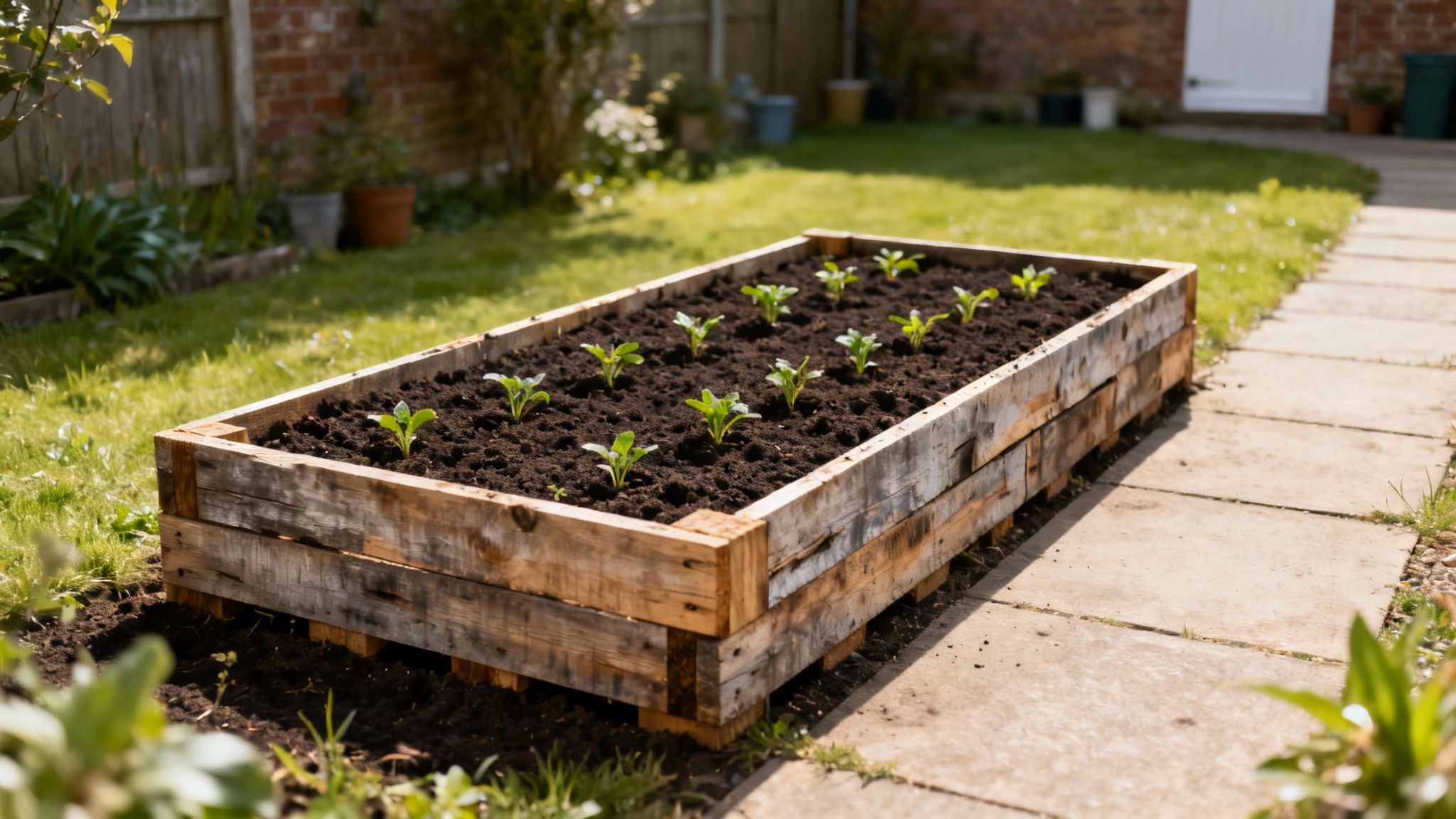
Constructing your own raised beds is a fantastic way to create defined, manageable growing spaces, and using reclaimed materials makes it one of the most resourceful garden ideas on a budget UK gardeners can embrace. Instead of buying expensive kits, you can build sturdy and stylish beds from items like old pallets, reclaimed bricks, or even corrugated metal sheets. This DIY approach not only slashes costs but also adds unique character to your garden while being environmentally friendly.
Sourcing and Building Your Beds
The key is to find safe, durable materials. Local businesses, garden centres, and online communities like Freecycle UK are excellent places to source free pallets. Always check for a "HT" stamp, which indicates the wood is heat-treated and safe for garden use, avoiding any marked "MB" (methyl bromide) or those that appear heavily treated with chemicals.
- Best materials: Untreated pallet wood, old bricks or paving slabs, and stacked tyres (ideal for deep-rooted veg like potatoes).
- Essential tips: Ensure your chosen location gets at least six hours of sunlight per day. Line the bottom of your new bed with cardboard to suppress weeds before filling it.
- Soil depth: Aim for a soil depth of at least 30cm to give roots plenty of room to grow.
Filling Your Raised Beds Frugally
Once built, filling your beds is the next step. To keep costs down, look for local council schemes that sometimes offer free or subsidised compost and topsoil. You can also create your own by layering twigs, leaves, grass clippings, and kitchen compost at the bottom, a method known as hügelkultur, which improves drainage and enriches the soil as it decomposes.
This project offers an accessible entry into more structured gardening, improving drainage and soil quality without a hefty price tag. For more creative ways to upcycle, you can find inspiration in these pallet wood projects.
3. Composting at Home
Create your own 'black gold' for the garden by turning kitchen and green waste into nutrient-rich soil conditioner. Home composting is a cornerstone of garden ideas on a budget UK gardeners can easily adopt, eliminating the need to buy expensive fertilisers and compost bags. By recycling organic matter, you not only enrich your garden soil for free but also significantly reduce household waste destined for landfill. It's a sustainable practice that benefits your plants, your wallet, and the environment.

Getting Started with Composting
Starting a compost heap is simpler than it sounds and requires a balance of 'green' and 'brown' materials. 'Greens' are nitrogen-rich (like grass clippings and veg scraps), while 'browns' are carbon-rich (like cardboard and dry leaves). Aiming for the right mix is key to creating quality compost efficiently. Many UK councils offer subsidised compost bins, making it an even cheaper endeavour to begin.
- The ideal ratio: Aim for roughly three parts 'brown' materials to one part 'green' materials to maintain a healthy balance.
- What to add: Browns include cardboard, newspaper, and fallen leaves. Greens include vegetable peelings, grass clippings, and coffee grounds.
- What to avoid: Never add cooked food, meat, fish, dairy, or diseased plants, as these can attract pests and introduce pathogens.
Maintaining Your Compost
Proper maintenance ensures your compost decomposes quickly and without unpleasant smells. The key is to manage moisture and aeration. Your pile should feel like a wrung-out sponge, not waterlogged or bone dry. Turning the heap every four to six weeks with a garden fork introduces oxygen, which speeds up the decomposition process, delivering your homemade fertiliser faster.
This method transforms waste into a valuable resource, providing your garden with all the nutrients it needs to thrive. For those with limited outdoor areas, you can explore other methods in this guide to composting for small gardens.
4. Seeds and Seedlings Propagation
Growing plants from seeds is one of the most rewarding and affordable garden ideas on a budget UK gardeners can embrace. Purchasing packets of seeds is significantly cheaper than buying established plants from a nursery, allowing you to fill your garden with colour and produce for just a few pounds. This approach also opens up a world of variety, giving you access to unique and heritage cultivars not commonly found in garden centres.
Getting Started with Seeds
You don't need expensive equipment to start propagating. Recycled materials like yoghurt pots, toilet roll tubes, or newspaper pots work perfectly as containers. The key is providing the right conditions for germination: warmth, light, and consistent moisture.
- Easy-to-grow choices: For beginners, start with seeds that germinate easily, such as sunflowers, courgettes, marigolds, beans, and pumpkins.
- Essential care: Place seed trays on a bright windowsill that receives at least 12 hours of light. Keep the compost moist but not waterlogged to prevent the seeds from rotting.
- Sourcing seeds: Look for reputable UK suppliers like Suttons or Thompson & Morgan for high germination rates. Community seed swaps are another excellent free resource.
Transitioning to the Garden
Before your young plants can be moved outdoors, they must be "hardened off". This process involves gradually acclimatising them to outdoor conditions over 7-10 days to prevent shock. Start by placing them outside for an hour on the first day, slowly increasing the duration each day.
This method requires a little patience but pays huge dividends in savings and satisfaction. For those looking to get a head start on the growing season, building a protective environment is a great next step; discover how to get started with this guide on building a DIY cold frame.
5. Free or Cheap Mulch and Ground Cover
Protect your soil and suppress weeds without spending a fortune by using free or cheap materials as mulch. This is one of the most effective garden ideas on a budget UK gardeners can implement to improve soil health, conserve moisture, and regulate temperature. Instead of buying expensive bark chippings, you can repurpose readily available resources like cardboard, newspaper, grass clippings, and fallen leaves to create a nourishing, protective layer over your garden beds.
Sourcing and Applying Your Mulch
The key to this thrifty technique is knowing where to look and how to apply the materials for maximum benefit. Many resources are already in your home or can be sourced locally for free. A thick layer of organic mulch will gradually break down, adding valuable nutrients and structure to the soil below.
- Best free materials: Cardboard and newspaper (non-glossy), grass clippings (apply in thin layers to avoid a slimy mess), shredded autumn leaves, and wood chips from local tree surgeons who are often happy to give them away.
- Application technique: For excellent weed suppression, lay down a layer of cardboard or 5-6 sheets of newspaper directly onto the soil, then cover with a more decorative mulch like wood chips or leaves.
- Ideal depth: Aim for a depth of 5-7cm (2-3 inches) to effectively block light from reaching weed seeds and to retain soil moisture.
Year-Round Mulching Strategy
Using mulch isn't just a one-off task; it's a continuous process that benefits your garden throughout the seasons. In autumn, collect fallen leaves in bags and store them to make leaf mould, a fantastic soil conditioner. In spring and summer, layers of grass clippings can be added to vegetable patches after each mow.
This method not only saves money on commercial products but also enriches your garden's ecosystem. A good mulch layer is also brilliant for insulation, which is crucial for overwintering tender plants. You can find more tips on getting your garden ready for the colder months by reading about protecting plants in winter.
6. Container Gardening with Repurposed Items
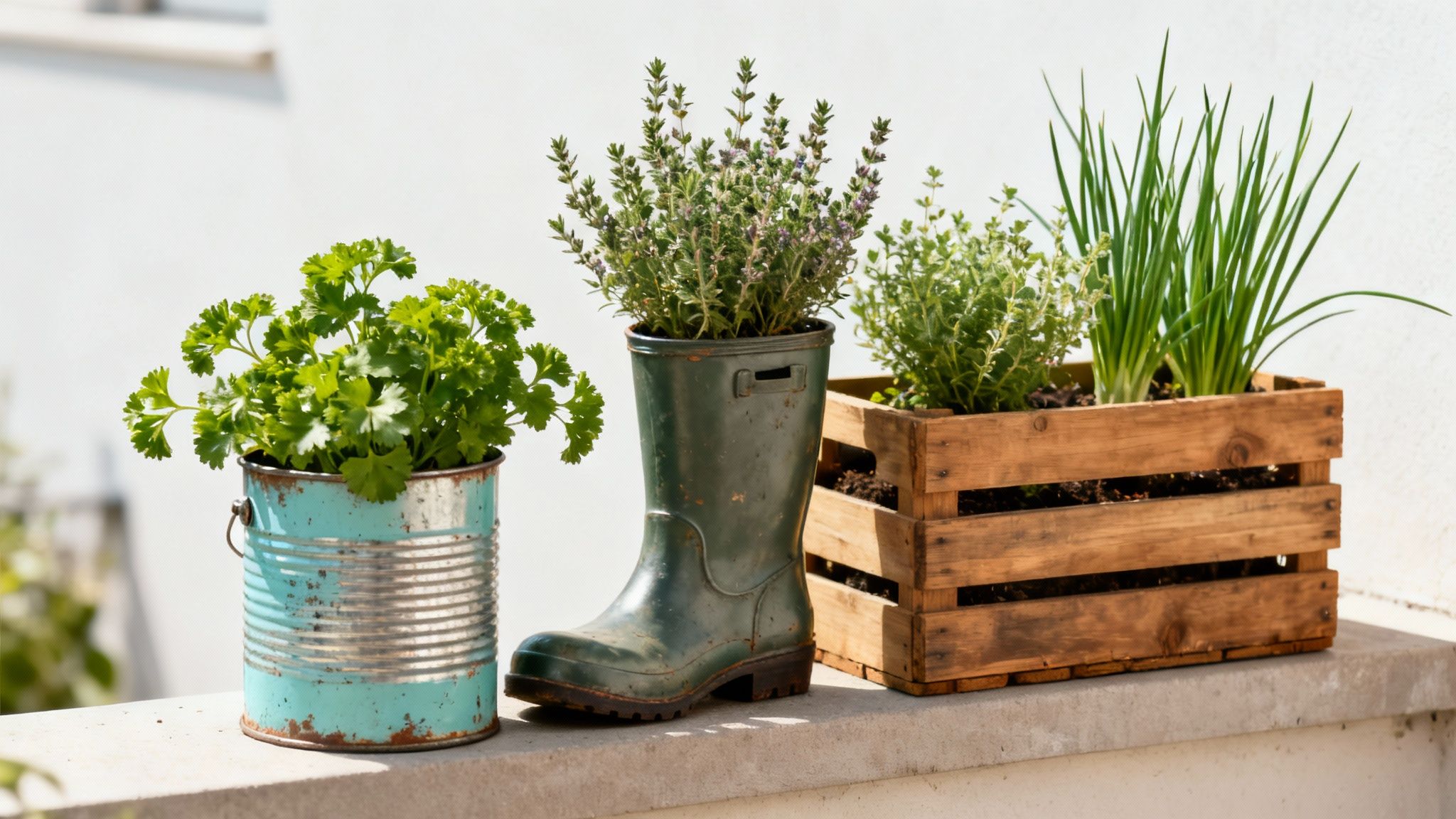
Unlock your creativity and save a significant amount on pots by embracing container gardening with repurposed items. Instead of buying new, expensive containers, look around your home and shed for everyday objects that can be transformed into unique planters. This approach is one of the most versatile garden ideas on a budget UK homeowners can adopt, allowing you to grow flowers, herbs, and even vegetables in any space, regardless of size, while also reducing household waste.
Finding and Preparing Your Containers
Almost anything that can hold soil can become a planter, from old wellington boots and tin cans to wooden crates and even tyres. The key is to ensure proper drainage to prevent waterlogging, which can lead to root rot. A few simple steps will prepare your chosen items for planting and help your plants thrive.
- Drill for drainage: Use a drill or a hammer and nail to create several small holes in the bottom of any non-porous container.
- Add a drainage layer: Place a 2-3cm layer of broken crockery, gravel, or small stones at the bottom before adding soil. This helps water escape freely.
- Get creative: Paint or decorate your containers to match your garden’s aesthetic. A simple coat of paint can transform a humble tin can into a stylish herb pot.
Planting and Care Tips
Container plants often require more frequent watering than those in garden beds, as the soil can dry out quickly, especially on warm, windy days. Using a good quality, peat-free compost will help retain moisture and provide essential nutrients for healthy growth. Grouping your repurposed containers together creates a stunning visual display and can also help create a more humid microclimate for the plants.
This method not only adds character and a personal touch to your garden but is also an excellent space-saver. By thinking vertically and using items like stacked tyres or wall-mounted containers, you can maximise your growing area, proving that a beautiful and productive garden doesn't require a large spend.
7. Perennial Plants and Bulbs
Choosing long-living perennial plants and bulbs is a cornerstone of any strategy for garden ideas on a budget UK gardeners should embrace. Unlike annuals that last for just one season, perennials return year after year. While the initial investment might be slightly higher, they provide far superior value over time, saving you money and effort on replanting every spring. They are the definition of a "plant once, enjoy for years" approach to gardening.
Getting Started with Perennials
The key to success with perennials is selecting varieties suited to your garden's conditions and the UK climate. Start with a few hardy, low-maintenance options to build a reliable backbone for your garden design. Lavender, for instance, can form a fragrant hedge that thrives for years with minimal care, while daylilies produce a profusion of flowers each summer.
- Best candidates for beginners: Lavender, Hostas, Sedum, Hardy Geraniums (Cranesbill), and bulbs like Daffodils and Alliums.
- Essential care: Plant in autumn or early spring to help them establish strong root systems before extreme weather hits. Check the plant's RHS hardiness rating to ensure it can survive a UK winter.
- Planting tips: For a fuller, more natural look, plant in odd-numbered groups of three or five. Mulching around the base during their first year will help retain moisture and protect the roots.
Creating Free Plants
One of the greatest long-term benefits of perennials is the ability to propagate them for free. After three or four years, many clump-forming perennials like hostas and daylilies can be lifted and divided. Simply split the root ball into smaller sections and replant them elsewhere in your garden or share them with friends.
This method not only fills your garden with more plants at no extra cost but also invigorates the parent plant, encouraging healthier growth. By investing in a few good perennials, you are essentially investing in an endless supply of future plants for your garden. For more detailed guidance, the RHS offers excellent advice on propagating perennials.
8. Water Harvesting and Recycling Systems
Reduce your water bills and create a more resilient garden by capturing nature's most valuable resource: rainwater. A water harvesting system is one of the most sustainable garden ideas on a budget UK homeowners can implement. By collecting rainwater from your roof, you gain a free, soft, and chemical-free water source that plants prefer over treated tap water. This approach is not only cost-effective but also environmentally conscious, especially during the increasingly frequent summer dry spells and hosepipe bans.
Getting Started with Water Collection
Setting up a basic system is surprisingly simple and affordable. A standard water butt connected to a downpipe is the perfect starting point. Many local councils even offer subsidised water butts, making them even more budget-friendly. For a DIY approach, you can repurpose large, food-grade barrels, which can sometimes be sourced for free or a very low cost from food manufacturing businesses or online marketplaces.
- Essential kit: Start with a 100-200 litre water butt, a stand to elevate it for easy access, and a diverter kit to connect it to a downpipe.
- Best placement: Position your butt on a flat, stable surface directly beneath a downpipe from a shed, greenhouse, or house roof to maximise collection.
- Maintenance: Cover the top with a lid or fine mesh to prevent mosquitoes from breeding and to keep debris out.
Using Harvested and Grey Water
Harvested rainwater is perfect for all garden uses, from watering delicate seedlings to topping up ponds. For even greater savings, consider recycling grey water from baths, showers, and washing-up bowls. This water can be used on ornamental plants, lawns, and established shrubs, but it's crucial to use it with care.
Avoid using grey water on edible crops like fruit and vegetables due to potential contaminants from soaps and detergents. Using soaker hoses connected to your water butt is a highly efficient way to deliver water directly to plant roots, minimising evaporation and waste. For a detailed guide on setting up your system, you can explore the RHS advice on rainwater collection.
9. Community Gardening and Sharing
Embrace the power of collaboration to slash your gardening expenses by engaging with local community initiatives. This approach leverages shared resources, knowledge, and labour, making it one of the most impactful garden ideas on a budget UK gardeners can adopt. From allotments to informal plant swaps, working with others reduces the individual cost of tools, seeds, and plants, while fostering a wonderful sense of neighbourhood spirit and shared achievement. It’s an excellent way to gain experience and access to resources you might not have on your own.
Getting Involved in Your Community
Finding a local group is often easier than you think. Start by searching online for allotments or community gardens managed by your local council. Projects like the Incredible Edible network, which creates communal food plots in public spaces, have groups all across the UK. These initiatives are perfect for beginners, as you'll be surrounded by experienced gardeners happy to share their wisdom.
- Where to look: Check your local council's website for allotment waiting lists. Search for local groups on Facebook, Nextdoor, or Freecycle for plant and tool sharing.
- Best for: Gardeners with limited space or a small budget, and those who enjoy the social aspect of gardening.
- Key benefits: Shared costs for tools, water, and soil, plus access to a wide variety of seeds and plants through swaps.
Maximising Shared Resources
Once you're connected, you can organise activities that benefit everyone. A simple seed swap at the start of the growing season can give everyone a diverse range of plants for free. Similarly, when dividing perennials, offer the spare clumps to neighbours instead of composting them. Sharing larger, more expensive tools like a lawnmower or a rotavator with a few trusted neighbours can save everyone hundreds of pounds.
This collaborative spirit not only makes gardening more affordable but also enriches the experience, turning a solitary hobby into a shared community success. For more information on finding a project near you, the Royal Horticultural Society offers a wealth of resources and a campaign to support community gardeners.
Budget Garden Ideas: 9-Point Comparison (UK)
Start Your Budget-Friendly Garden Transformation Today
Creating a vibrant, productive, and beautiful garden is not about the size of your budget; it’s about the scale of your imagination. Throughout this guide, we have explored a wealth of practical and affordable strategies tailored for UK gardens. From the simple act of regrowing vegetables from kitchen scraps to the rewarding project of building raised beds from reclaimed timber, each idea demonstrates that resourcefulness is the most valuable tool a gardener can possess.
The journey to a stunning garden on a shoestring budget begins with a shift in perspective. Instead of seeing limitations, you can start to see opportunities everywhere: a discarded pallet becomes a vertical planter, kitchen waste transforms into nutrient-rich compost, and a collection of old wellies or tin cans finds a new purpose as quirky, character-filled containers. This approach not only saves you a significant amount of money but also fosters a more sustainable and environmentally conscious way of living.
Your Action Plan for a Thrifty Garden
To help you get started, let’s recap the most impactful takeaways. Think of this as your personal checklist for cultivating a low-cost, high-reward outdoor space.
- Start Small and Grow Smart: You don't need to tackle everything at once. Begin with a single project, such as propagating seedlings on a sunny windowsill or setting up a simple water butt to harvest rainwater. Mastering one small technique builds confidence for the next.
- Embrace the Power of Community: Your local area is a goldmine of resources. Connect with neighbours to swap seeds, join online gardening groups to source free plants, or get involved in a community garden to share tools and knowledge. These connections are invaluable for any gardener, especially those looking for garden ideas on a budget UK style.
- Think in Circles, Not Lines: Adopt a circular gardening mindset. Compost your waste to feed your soil, save seeds from your best plants to sow next year, and repurpose old items to avoid buying new. This closed-loop system minimises waste and expenditure, creating a self-sufficient garden that practically pays for itself over time.
By embracing these principles, you are not just saving money; you are investing in a deeper, more meaningful connection with your garden and the natural world. You are learning to work with nature, not against it, creating a space that is not only visually pleasing but also ecologically balanced and personally fulfilling. The satisfaction of enjoying a meal made with vegetables you grew from scraps or admiring a border filled with perennials shared by a friend is a reward that money simply cannot buy. Your dream garden is well within reach, so pick an idea that inspires you, roll up your sleeves, and watch your budget-friendly vision come to life.

.jpeg)